
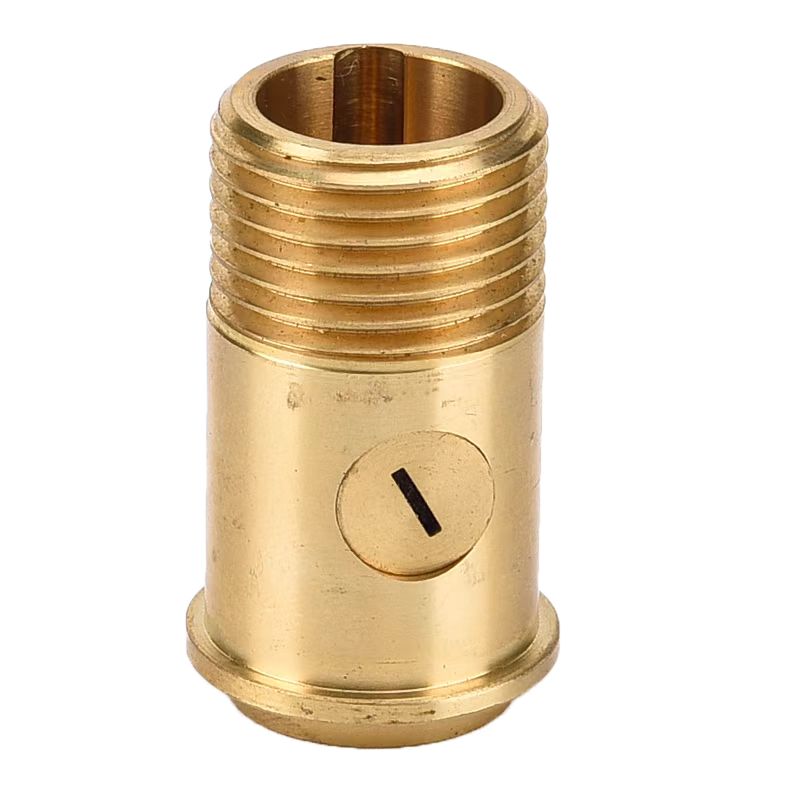
Bottom line first: The most dangerous stamping supplier is the one whose first article report is flawless. Why? Because a first article proves the die can make a good part under ideal conditions; it does not prove the press line will keep making good parts at volume. Understanding why metal stamping parts pass first article but fail in production is the fastest way to protect your assembly line from a sudden batch of scrap.
Why is a “perfect” first article actually a warning sign?
Direct answer: Because it usually means the die was tuned manually by a senior technician, using a fresh tool, slower press speeds, and a hand-picked material strip.
Stamping is not CNC machining. In CNC, tool wear is gradual and the operator can adjust offsets mid-run. In stamping, once the die is clamped into the press, the springback is locked in. If that die was tuned to perfection on a Tuesday afternoon by the shop foreman using the best material in the warehouse, the first article will look incredible.
But Tuesday’s perfection doesn’t survive Tuesday night. When the night shift operator runs the press at standard speed, using a new steel coil with a slightly different yield strength, the variables shift. The part that looked perfect on the FAI report suddenly drifts out of tolerance.
| What a flawed FAI hides | What it actually means | What to ask instead |
|---|---|---|
| Dimensions at nominal | The die was manually tweaked | “What is the process spread across 30 parts?” |
| One perfect part | No statistical capability data | “Show me the Cpk for this critical feature.” |
| Material certificate attached | The material is correct | “Was the FAI run on production material or a sample?” |
✅ Takeaway: A flawless first article report tells you what the die can do in the hands of an expert. It tells you nothing about what the press will do on a Friday night.
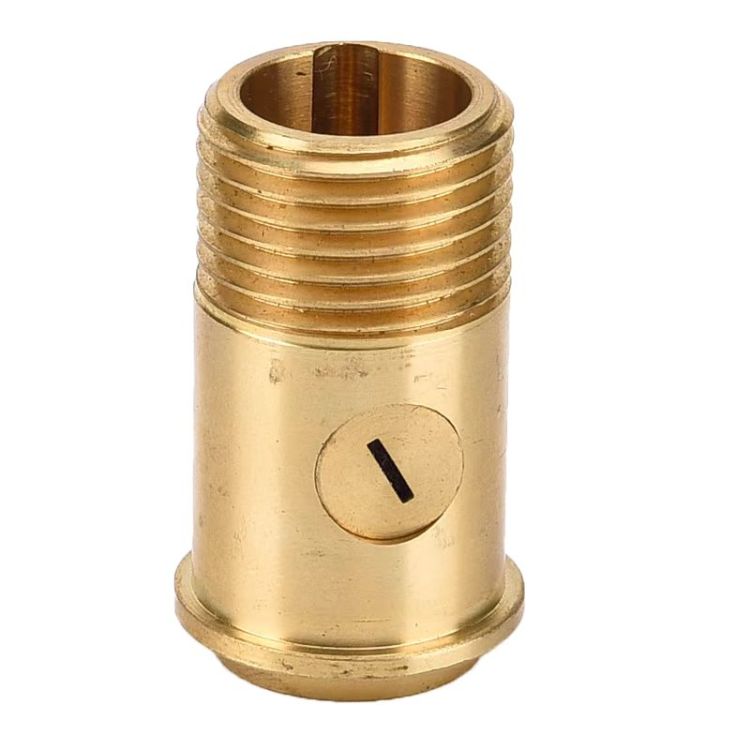
Variable 1: Has springback compensation been verified against material batches?
Direct answer: Springback shifts when the steel’s yield strength changes from coil to coil. If the die’s compensation isn’t verified against your specific production lots, your bend angles will drift.
Every stamped bend springs back 1° to 3° after the punch retracts. A properly engineered die pre-compensates the cavity angle to account for this. But here is the trap: a new coil of steel often has a slightly different yield strength—even if it meets the same ASTM spec. A 0.02% shift in yield strength can change the springback by 0.5°.
When considering how to predict batch drift before it happens in metal stamping, the first thing to ask is how the supplier manages springback. Did they calculate the compensation based on the actual yield strength of your production coils, or did they just tune it until the first piece looked good? A professional supplier logs the springback angle for every material lot.
✅ Takeaway: Springback is not a constant; it is a variable. If the supplier cannot tell you how they compensate for material lot changes, they are hoping your parts fit.
Variable 2: Is the feed pitch monitored in real-time or just at final inspection?
Direct answer: In a progressive die, a 0.05mm error in the feeder accumulates with every stroke. By the time final inspection catches it, you’ve already stamped 5,000 scrap parts.
A progressive stamping die makes multiple hits per stroke. The strip moves forward via a servo feeder by a precise pitch distance. If the feeder slips by just 0.02mm, the first few parts might pass. But by part 500, the hole position has drifted 10mm off target, and you have a coil of parts that are completely unusable.
The wrong answer from a supplier: “We check the final part.” Final inspection is an autopsy. The right answer is an in-line monitoring system. The servo feeder should have closed-loop feedback, and the press should have a sensor that stops the run if the pitch drifts beyond a set tolerance.
This is the core of preventing batch scrap in stamping production. Ask them: “What stops the press if the feeder slips?” If they don't have a real-time sensor, they are relying on luck and an operator’s eyesight.
✅ Takeaway: In stamping, the most expensive part is the one you didn’t know was drifting. Real-time feed monitoring is cheaper than a failed shipment.
Variable 3: How does the supplier track die wear and edge sharpening?
Direct answer: Stamping dies wear out. When the edge dulls, burr height increases and blanking dimensions change. If there is no stroke-count-based maintenance plan, drift is guaranteed.
Unlike CNC tools that can be swapped in seconds, stamping dies run until the edge needs regrinding. As the edge wears, the cutting clearance increases. The result is a gradual increase in burr height and a change in the part’s outer dimensions (the blanking profile).
A good supplier maintains a die maintenance log. They know that after 50,000 strokes, the edge must be inspected, and after 100,000 strokes, it must be reground. When they regrind, they adjust the die height and run a new FAI.
A bad supplier runs the die until the parts look terrible, then takes it off the press for an emergency repair. When evaluating how to check if a stamping supplier's die maintenance is disciplined, ask to see the maintenance log for a comparable part. If they don’t have one, every batch you order is a gamble on how much die life is left.
✅ Takeaway: Die wear is a countdown timer. Without a stroke-count log, the supplier is guessing when the timer will hit zero—and your order is the one on the press when it does.
FAQ
1. The first article passed, but the batch is out of tolerance. Can I ask for a re-run for free?
You can ask, but the root cause must be identified first. If the issue was springback from a new material lot, or a feeder slip, or die wear, a blind re-run will just produce another batch of scrap. Ask the supplier to provide the process log: what was the material lot number, when was the last die sharpening, and what was the feeder pitch variance? Only with this data can a re-run succeed.
2. Why does stamping have this problem, but my CNC parts arrive perfectly?
Because CNC is a single-point cutting process that can be adjusted at any time, while stamping is a forming process locked into a die. In CNC, if a tool wears, the operator changes the offset. In stamping, if the die wears, the entire die must be pulled, disassembled, and reground. The physics of stamping mean the process is much more sensitive to material lot variations and die maintenance cycles. That is exactly why metal stamping parts pass first article but fail in production is such a common phenomenon.
3. How many parts should I ask for in a pilot run to verify stamping stability?
For a progressive die, run at least 500 to 1,000 strokes. This is enough to see feeder drift and early die wear. Measure the first part, the 100th part, and the 500th part. If the dimensions at part 1 and part 500 match within 30% of the tolerance band, you have a stable process. If not, you have a latent failure.
Published: November 2026 | By Allytech Engineering Team