
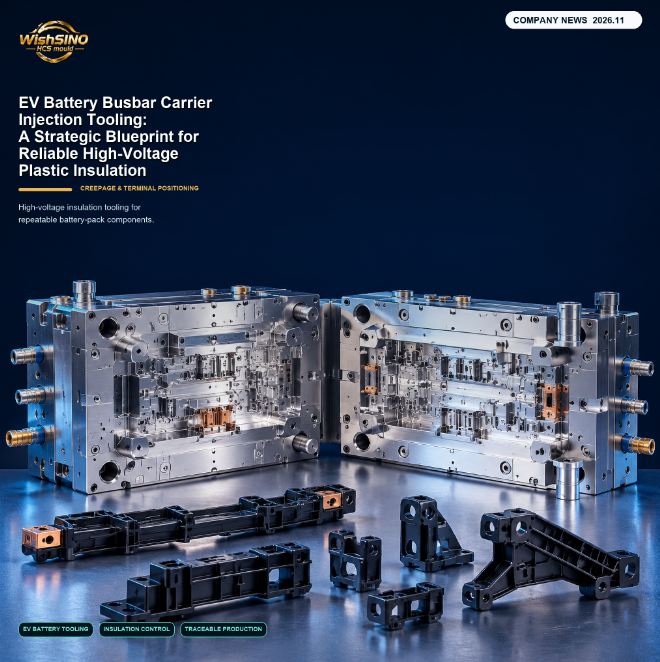
EV Battery Busbar Carrier Injection Tooling: A Strategic Blueprint for Reliable High-Voltage Plastic Insulation
Nov 21, 2026
Creepage Control and Terminal Positioning: The Technical Roadmap for Repeatable Battery-Pack Components
Electric-vehicle battery systems depend on plastic components that organize conductive hardware while protecting electrical interfaces from unintended contact, vibration, heat, and assembly variation. Busbar carriers, terminal separators, sensing brackets, connector supports, and insulating clips must fit accurately around metal conductors and remain stable through pack assembly. For procurement teams, the mold is part of the electrical-risk strategy as well as the production plan. [EV Battery Busbar Carrier Injection Tooling] connects cavity accuracy, insulation geometry, insert-free positioning features, material control, and inspection evidence into one program.
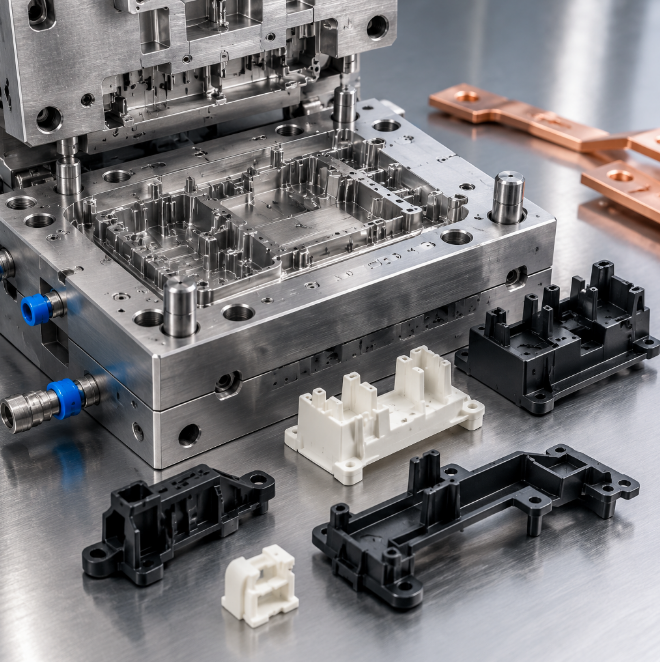
The first engineering priority is [Creepage, Clearance, and Terminal Positioning Control]. A stable mold must reproduce insulating ribs, locating towers, snap features, conductor channels, and connector interfaces without flash or dimensional drift. Gate placement, venting, cooling balance, draft, ejection direction, and steel support around thin insulating walls all influence the final electrical and assembly performance. The design review should also consider how operators and automation locate the molded carrier during busbar installation, testing, and service replacement.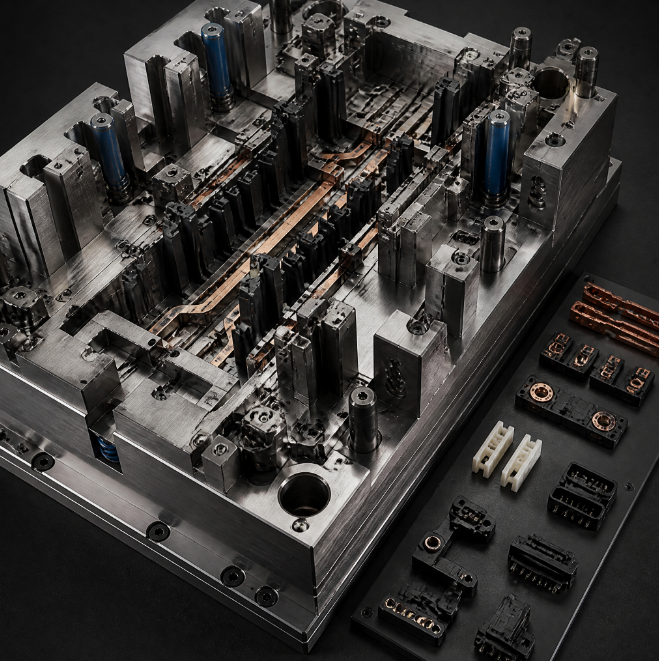
For battery-system buyers, [Repeatable High-Voltage Insulation Components] means that each busbar carrier, terminal separator, sensor bracket, and connector support can meet critical fit and isolation requirements across production lots. A practical qualification plan links resin batch records, cavity identification, molding parameters, dimensional checks, visual inspection, terminal-fit verification, and electrical test evidence where required by the approved product specification. This creates a clearer route for separating a tooling deviation from a conductor, material-conditioning, or assembly issue.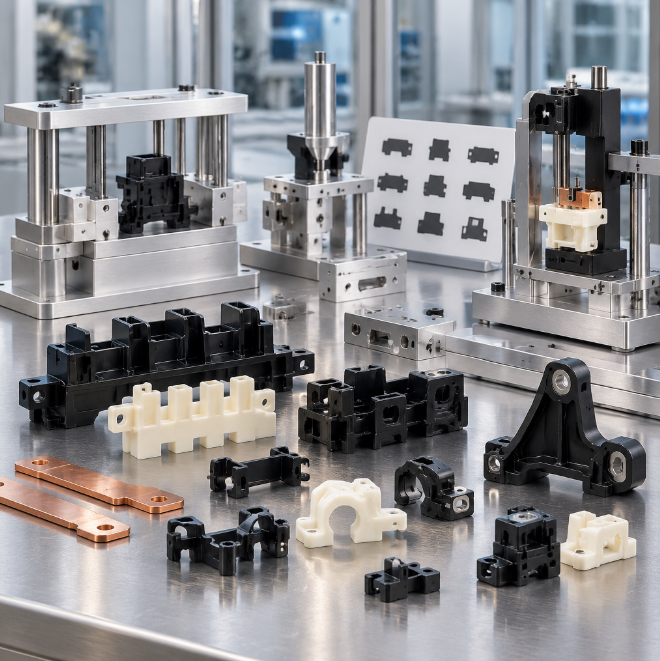
Serviceability matters because battery platforms may evolve through cell layout changes, regional variants, and long production programs. Replaceable cavity details, accessible vents, protected ejector components, clear spare-part definitions, and documented restart checks help reduce the risk of unplanned downtime. When the mold, insulating material, conductor interface, automation handoff, and inspection plan are developed together, battery-component suppliers can offer buyers a more controlled path from design validation to repeatable pack assembly.