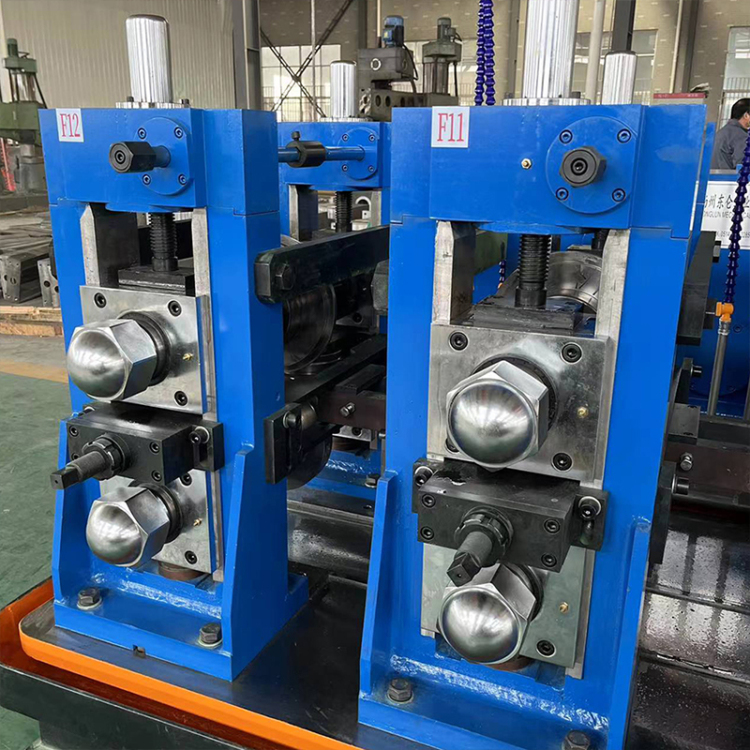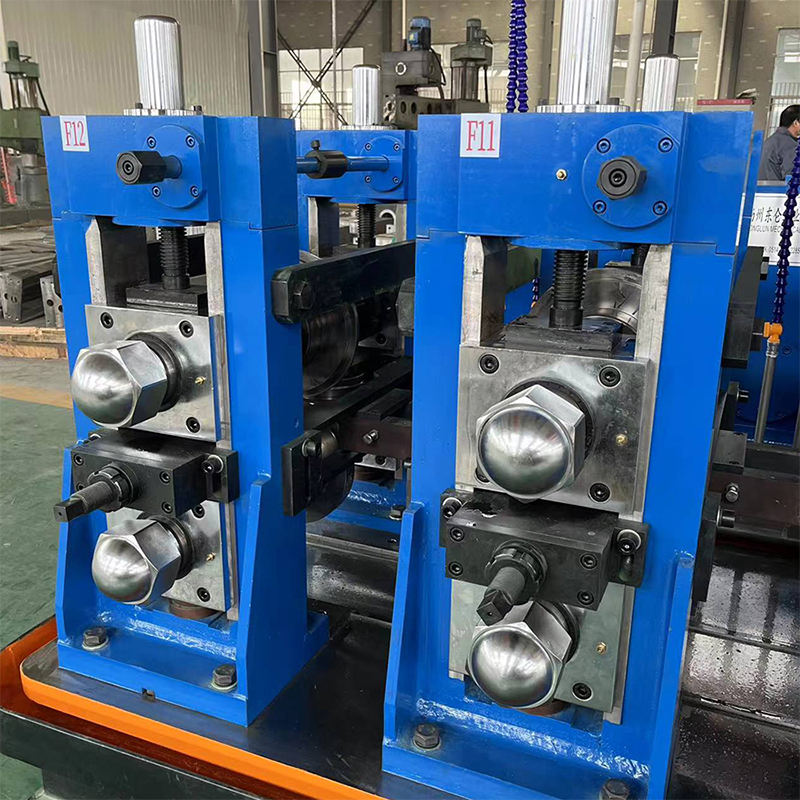
You run the material through the Roll Forming Machine, and the profile comes out looking like a roller coaster. One edge is wavy, or the whole section is twisted like a corkscrew. These are the two most common roll forming defects, and they are almost always a sign of improper setup rather than a broken machine.
Edge Wave usually appears as a rippling effect along one or both edges of the strip. It happens when the edge of the material travels a longer path than the center, or when the horizontal roll gap is too tight. If the edge is compressed excessively, the material has nowhere to go but sideways. This is particularly common when running softer materials like an Aluminum Tube profile, where excessive springback combined with aggressive roll pressure easily buckles the edge. The fix is usually to loosen the horizontal guides slightly and ensure the material isn't being over-constrained.
Twist, on the other hand, means the cross-section is rotating as it exits the machine. This almost always points to a symmetry problem. If the left and right sides of the machine are applying uneven pressure, the strip will twist. It can also happen if the coil itself has a camber, or if the rollers are not perfectly aligned on the shafts. A similar challenge exists in a Carbon Steel Tube Mill, where uneven pressure from the forming rolls can create a spiral seam.