1. What Makes a Mushroom Farm's Composting Genuinely Eco-Friendly?
True eco-friendly composting on a commercial farm means controlled aerobic processing, high substrate utilization, and closed-loop reuse of spent material — not an open windrow left to rot by the fence.
The difference is engineering. In engineered tunnel systems, Phase I fermentation runs for 8–10 days at 60–70°C and Phase II pasteurization holds the substrate at 57°C for 5–7 days. That controlled process kills pathogens and weed seeds without chemical treatment, cuts odor and leachate to near zero, and produces a substrate uniform enough for industrial cropping. Open-ground composting cannot deliver any of those guarantees.
Real-world results from closed-loop farms make the case:
|
Closed-loop case |
Location |
Key results |
|
Rice–mushroom cooperative with mechanized straw composting |
Vietnam (Mekong Delta) |
Chemical nitrogen use cut by 40%; savings of US$57–65 per hectare per season; straw burning down 90–95% in its area |
|
Industrial straw-mushroom farm cluster |
Quzhou, China |
Over 90% crop straw in substrate; 1,200+ tons of straw processed per year; more than ¥250,000 saved annually on raw materials |
|
Industry resource benchmark |
Global |
Roughly 1.0 kWh electricity and 0.7 lb CO₂e per pound of mushrooms produced — figures that adaptive IoT climate control has been shown to reduce by about 20% |
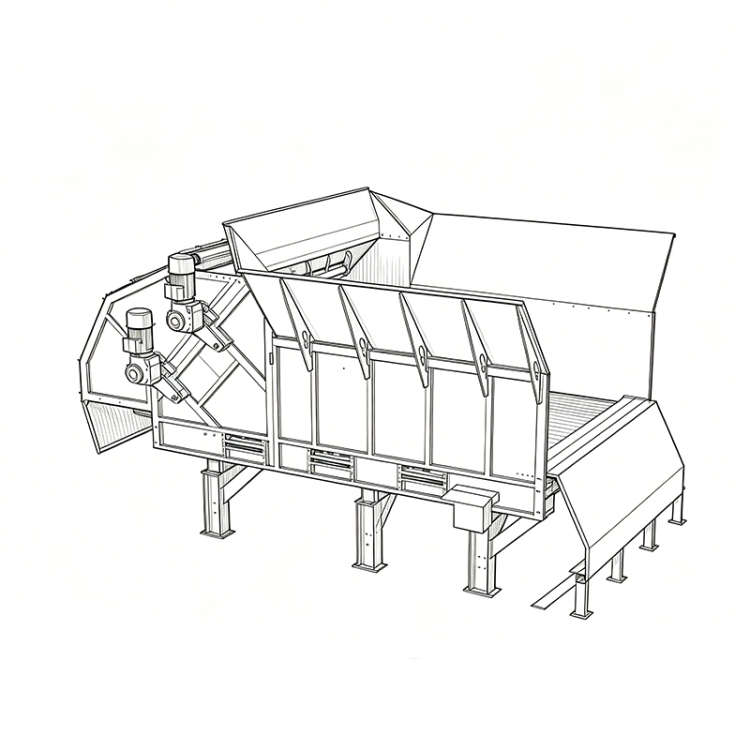
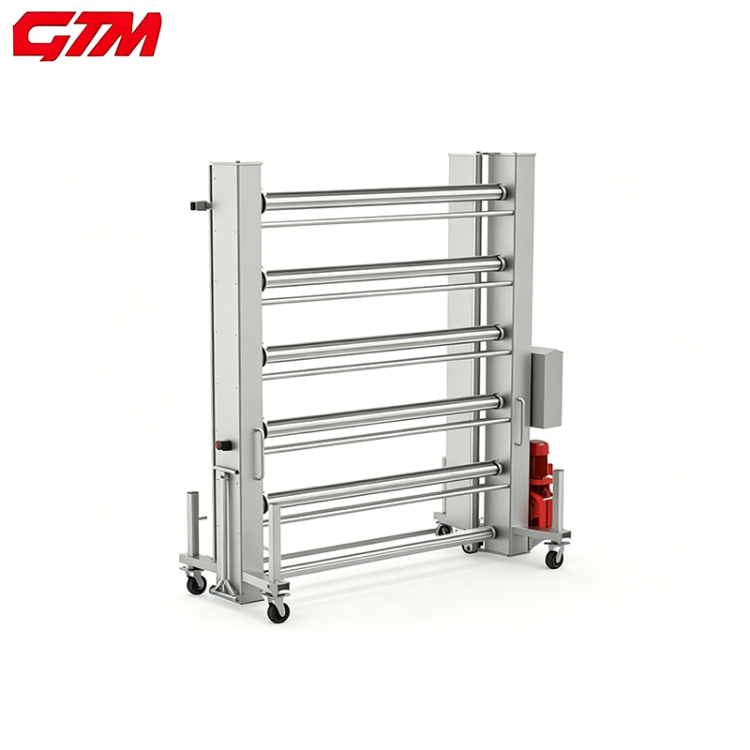
Modern composting machinery is what makes these numbers achievable at scale. Precise pre-wetting brings substrate moisture into the 50–60% range before fermentation; mixing lines balance the carbon-nitrogen ratio; aeration nets and pulling winches keep oxygen flowing through the tunnel. After harvest, a block press turns spent compost into dense, transportable blocks that hold resale value instead of becoming a disposal liability. GTM Composting Equipment covers this entire loop, and Zhejiang Hongye Equipment Technology Co., Ltd. supplies these organic waste solutions as an OEM/ODM factory with ISO9001 and ISO45001 certification.
✅ Bottom line: Eco-friendly status comes from controlled temperature, closed-loop substrate reuse, and verified process data — three things only engineered tunnel systems can deliver.
2. Can Sustainable Waste Management Actually Pay Back? The ROI View
Yes — farms that close the waste loop typically recover equipment investment faster than farms that only automate, because every ton of diverted waste becomes either a cost avoided or a product sold.
The market is rewarding this shift. The global waste composting machine market was valued at USD 1.09 billion in 2025 and is forecast to reach USD 1.95 billion by 2032 at an 8.66% CAGR. Buyers of compost — and of mushrooms grown on it — increasingly follow sustainability signals: surveys show up to 70% of consumers pay a premium for products with credible environmental certification.
Where the money actually comes from:
- Disposal costs avoided: hauling spent substrate off-farm is a pure expense; on-farm fermentation converts it into usable or sellable material.
- Compost resale: pressed compost blocks are easier to store and transport, turning a waste stream into a secondary product line.
- Input savings: closed-loop substrate reduces fertilizer and chemical purchases on the farm's own fields.
- Certification premiums: ISO 14001-aligned sustainable waste management practices open doors to buyers with ESG procurement targets — especially in Europe and North America.
For farms planning an upgrade, the practical question is not whether to go circular but which composting machinery unlocks it first. Most operations start with the filling and fermentation stage, where process control has the largest yield impact, then add spent-substrate handling and block packaging in a second phase. Because GTM engineers complete lines rather than single machines, a farm can phase its investment without buying equipment twice — and as a China-based manufacturer with its own export license, GTM supports custom line layouts, wholesale pricing, and OEM/ODM configuration for overseas buyers.
✅ Bottom line: Every ton of waste diverted on-farm is a disposal fee avoided and a product gained — which is why circular composting pays back faster than automation alone.
FAQ
Q: Is eco-friendly composting profitable for small and mid-size farms? A: Yes. Even small operations recover value through avoided disposal fees and reduced fertilizer purchases; payback shortens further once pressed compost blocks are resold. The key is matching equipment capacity to actual waste volume rather than over-specifying.
Q: What equipment is essential to start closing the waste loop? A: A mixing/wetting line for controlled fermentation, tunnel aeration and winch systems for process consistency, and a block press for the finished or spent compost. GTM Composting Equipment offers all three stages as modular, custom-configurable organic waste solutions.
Q: How do we prove our composting process to buyers and auditors? A: Controlled tunnel composting generates verifiable data — temperature curves, pasteurization durations, moisture records — that open-windrow methods cannot provide. This process evidence supports organic and ISO 14001-aligned certification claims for your substrate and mushrooms.
CTA
Send GTM your farm's daily substrate volume and waste stream profile — our engineers will return a free closed-loop composting plan with equipment configuration, capacity calculation, and payback estimate within 3 working days. Contact Zhejiang Hongye Equipment Technology Co., Ltd., your China-based OEM/ODM supplier for sustainable composting systems, and start converting waste into profit this season.