
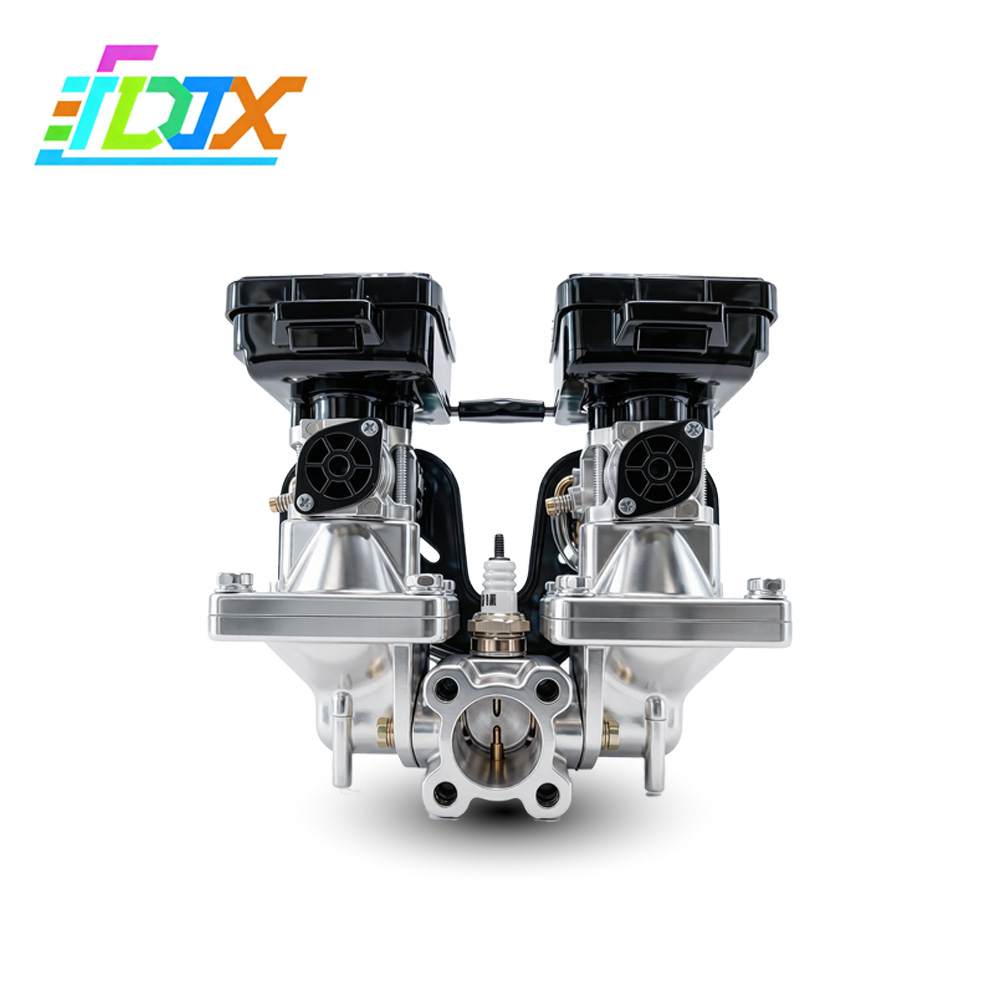
Diaphragm metering has become the default for small two-stroke and four-stroke power equipment because it keeps the fuel curve stable in any orientation, while float-bowl designs only suit steady, upright engines. For buyers evaluating an aerial program, the starting point is almost always the Drone Carburetor, since unmanned platforms tilt and climb and a float bowl would starve the engine the moment the airframe pitches. JINXING is an integrated manufacturer building both diaphragm and float-type units across its cutter, mist-applicator and turf-machine lines, so the real question is not which technology is "better" but which one matches the mounting and fuel environment. This article compares the two architectures on the four duty cycles and explains where each earns its place.
1. Why does diaphragm metering dominate handheld and aerial engines?
A diaphragm unit uses engine pulse pressure to draw fuel, so it works upside down, sideways, or while pointing skyward, exactly what a handheld saw or an aircraft demands. The Chainsaw Carburetor is the clearest proof: a cutter is swung, tilted and often held above shoulder height, and any design relying on gravity-fed fuel would stall in seconds. Diaphragm bodies also tolerate vibration and dust better, which is why they dominate garden and aerial equipment worldwide. JINXING offers diaphragm bodies in both engineering plastic and aluminum, letting distributors balance cost against duty grade.
The trade-offs are worth spelling out before you choose a body material:
- Plastic diaphragm bodies resist ethanol-blended fuel and corrosion, and they cost less at scale, which suits high-volume consumer grades.
- Aluminum diaphragm bodies survive higher heat and harder impacts, which is why professional and high-displacement platforms still prefer them.
- Both share the same pulse-driven principle, so field mechanics learn one service routine across your whole range.
A quick comparison of the two architectures helps distributors explain the choice to their own customers.
| Criterion | Diaphragm metering | Float-bowl metering |
| Orientation tolerance | Any angle, including inverted | Upright only |
| Vibration resistance | High | Moderate |
| Best-fit platforms | Cutters, aerial, mist, turf | Stationary, marine, upright |
| Typical body material | Plastic or aluminum | Usually aluminum |
Distributors frequently ask which architecture to lead with when a new engine brand enters their catalog. The pragmatic default is a diaphragm unit for anything handheld or airborne, because orientation freedom removes the most common no-start complaint, and a float unit for stationary or marine duty where a bowl is simpler for a field mechanic to clean. Because JINXING builds both from one plant, the choice becomes a stocking decision rather than a sourcing one, and you can phase the transition without qualifying a second supplier.
✅ Bottom line: Diaphragm metering wins wherever the engine moves or tilts; reserve float designs for steady, upright duty.
2. Where does a float-type unit still make sense?
Float-type metering still wins for engines that sit upright and run at a steady load, because the bowl gives a naturally stable fuel head. The Fogger Carburetor range includes float designs tuned for backpack mist blowers and knapsack sprayers, where the unit stays roughly level and a simple, serviceable bowl is easier for field mechanics to clean. For many agricultural markets this serviceability outweighs the orientation freedom of a diaphragm. JINXING supplies both, so a distributor can stock the right architecture per region rather than forcing one design everywhere.
The Lawn Mower Carburetor decision is similar: walk-behind and ride-on turf machines run upright and at variable but predictable load, so a float or a diaphragm both work, and the choice often comes down to service culture and parts commonality. Fujian Fuding Jinxing General Machinery Carburetor Co., Ltd. recommends matching the body material to the fuel and climate, aluminum where heat and impact dominate, engineering plastic where ethanol-blended fuel and corrosion are the bigger threat. Either way, confirm the six certificate-verification items and the about-one-month lead time before you allocate shelf space, and ask the factory to map your private-label model numbers so the same physical unit carries your brand in the market.
When you brief your own resellers, lead with the failure mode each design avoids: diaphragm units avoid orientation starvation, float units avoid pulse-port clogging in very dusty, low-RPM service. Neither is universal, and a mixed stock lets you answer every buyer instead of turning some away.
A low-risk way to commit is to run twenty units of each architecture through a quarter of real field work in your fuel and climate, then count the bench fixes. The design with the lower fix rate in your conditions is the one to stock deeper, even if its unit price sits a little higher. This empirical check beats any catalog argument, and it gives your resellers a defensible story instead of a guess.
✅ Bottom line: Float designs earn their place on upright, steady-load engines where field serviceability matters more than orientation freedom.
FAQ
Q: Can one supplier provide both diaphragm and float designs?
A: Yes. JINXING manufactures both architectures across cutter, aerial, mist-applicator and turf-machine lines, so distributors can mix stock by region and duty rather than committing to a single design.
Q: Which body material lasts longer in the field?
A: It depends on the threat. Aluminum resists heat and impact; engineering plastic resists ethanol fuel and corrosion. Match the material to the fuel and climate, not to a single global rule.
Q: Are these units interchangeable between engine brands?
A: Only when the mounting pattern, pulse port and throttle linkage match. Always cross-reference the model number and request a sample fit-check before listing a unit as a universal replacement.
Get a cross-reference before you reorder
Contact the JINXING China factory with your top engine models and ask for a diaphragm-versus-float recommendation per SKU, plus private-label mapping and the certificate six-pack. A correct architecture choice cuts your return rate more than any price discount.
Mobile: +86 13777534699
Email: [email protected]
Website: www.jinxingcarb.com