
1. Why the Seam Sets the Specification
Flatness is the spec most buyers ask about; the seam welder never reads it — the inversion Ruilong designs drum and tank lines around. A drum body is flanged, corrugated and rolled — operations that forgive moderate waves — but the longitudinal seam weld runs on a fixed lap margin, and it reads only two inputs: how wide the sheet is at the seam edges, and how straight the edges are along their length. Everything else is downstream forgiveness.
|
Product |
Typical gauge |
Width tolerance |
Length tolerance |
Camber limit |
Flatness |
|
210 L drum body sheet (~920 × 1,830 mm) |
1.0–1.5 mm |
±0.5 mm |
±1.0 mm |
≤0.5 mm/m |
≤2 mm/m |
|
Drum lid / end blank (~Ø660 mm) |
1.2–1.5 mm |
±0.5 mm |
±1.0 mm |
≤0.5 mm/m |
≤2 mm/m |
|
Tank shell section (welded vessels) |
2.0–6.0 mm |
±1.0 mm |
±2.0 mm |
≤0.5 mm/m |
≤2 mm/m |
The arithmetic behind the ±0.5 mm width tolerance: the seam lap margin on a 210 L drum body is 8–10 mm, set by the welder's electrode fingers and the welding schedule. Width drift eats that margin from both sides — a sheet 1 mm narrow on one edge shifts the lap zone asymmetrically, the weld root lands off-center, and the joint fails the 0.3 bar air test. Camber does the same damage along the length: a seam line that wanders 0.5 mm/m over a 1.8 m body means the welder's tracking either chases the wander or misses the lap at the ends. Both failure modes appear at the welder, hours after the sheet was cut, which is why the acceptance sheet for drum body stock tests width and camber per bundle — not just visual flatness.
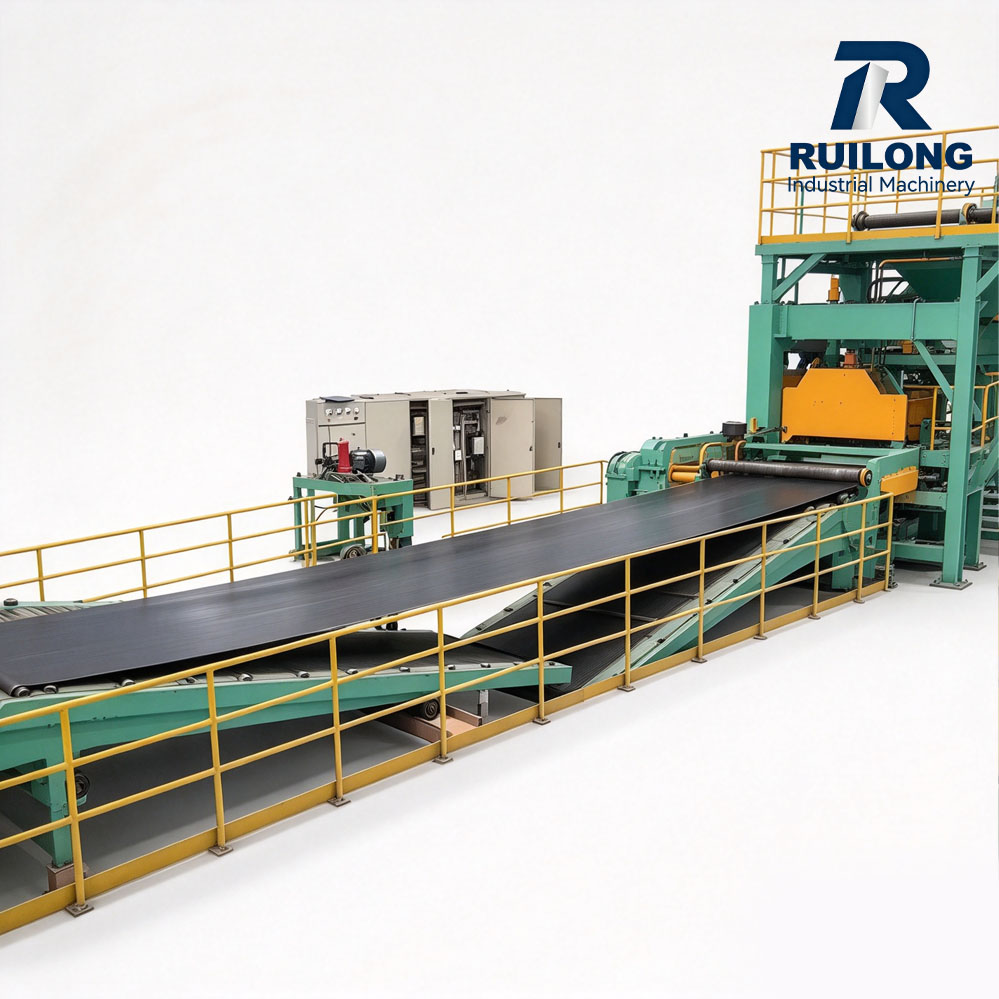
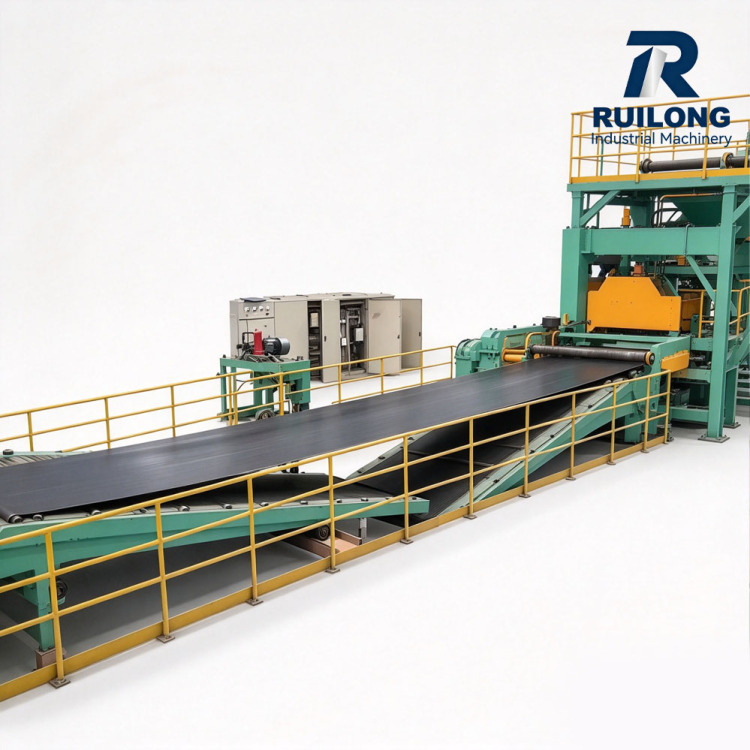
Ruilong builds drum-body lines around this seam-first inversion: the side-trimmer and camber controls get the engineering margin, and flatness stays at the ordinary leveler standard the corrugating press expects anyway.
✅ Bottom line: The seam welder reads width and camber, not flatness — spec those two tight and the flatness follows at the standard leveler grade.
2. How the Line Holds Width and Camber Bundle After Bundle
Camber is inherited before it is cut, so the control point is upstream of the shear — and the width is held by a trimmer, not by the coil's nominal width. Coil off the hot mill carries coil set and edge camber that no cutting scheme removes; the line has to overwrite them mechanically, then hold the trimmed edge to tolerance for the whole coil.
|
Defect source |
Where it acts |
Control on the line |
|
Coil set (curvature from coiling) |
Whole strip curves on exit |
Rough leveler, full plastic penetration per the coil-set regime |
|
Edge camber (rolling asymmetry) |
Edges run different lengths |
Tension bridle between sections; leveler intermesh graded edge-to-center |
|
Slit-width drift |
Width varies along the coil |
Motorized side-trimmer with guided rotary knives, edge gauge on first piece + every 50th sheet |
|
Width offset between bundles |
Width varies coil-to-coil |
Recipe presets per coil width; side-trimmer position programmed, not hand-set |
|
Edge quality at the seam |
Burrs catch the welder fingers |
Trimmed edge deburred or chamfered in the trimmer pass |
Two measurement habits make the table real. First, camber is measured on the cut sheet, over its full length, on a flat table — the half-meter classroom measurement misses the long-wavelength camber that actually misleads a welder. Second, width is measured at both seam edges, not averaged: a sheet that is 0.3 mm wide on average but 0.8 mm narrow at one edge is the failing case, and an average hides it. A drum plant that logs both readings per bundle typically finds width drift correlating with a specific coil supplier's edge quality — useful leverage at the next steel negotiation.
For buyers extending into tank shell work, the same controls scale: thicker gauge raises the leveling force requirement (the t² relationship covered in our leveling-force article), but the acceptance logic — width at the seam, camber over full length — is identical, and holding sheet width tolerance for tank shell welding at ±1.0 mm uses the same trimmer discipline.
✅ Bottom line: Camber is fixed upstream with leveler and tension, width with a motorized trimmer — and both are measured per bundle at the edges the welder will actually grip.
FAQ
Q: Why is width tolerance tighter than flatness on drum body sheet? A: Because the seam lap margin is finite and unforgiving — flanging and corrugating forgive waves, but a 1 mm width error at the seam edge shifts the weld root off the lap zone directly, and that failure only shows up as a leak-test reject downstream.
Q: Should the drum body coil arrive pre-slit or be slit on the CTL line? A: Either, but holding ±0.5 mm consistently argues for trimming on the line: a guided side-trimmer re-cuts both edges against a measured reference, while pre-slit coil arrives with whatever tolerance the slitter ran — on a cut to length line for steel drum body sheet scope Ruilong recommends the trimmer when the welder rejects drift past a few bundles a week.
Q: What camber limit should I demand at the welder, and who owns it? A: ≤0.5 mm/m measured over the full sheet length — the leveler and bridle own it upstream, because camber control for drum body coil happens before the cut, not after; the acceptance is yours: measure camber per bundle on a flat table, and Ruilong supplies the log sheet format with the line's O&M manual so the data starts on day one.
Get the Seam-First Spec for Your Drum or Tank Program
Send Ruilong your drum or tank dimensions, gauge range and welder type, and the engineering team will return the seam-first specification with trimmer and camber sizing in a custom line quote from our China factory: as the manufacturer behind Tai'an Ruilong Machinery Co., Ltd., we quote supplier/OEM-direct with the scope itemized, free of charge and without obligation.