
1. Where the Coating Dies — Pressure, Friction and Embedded Grit
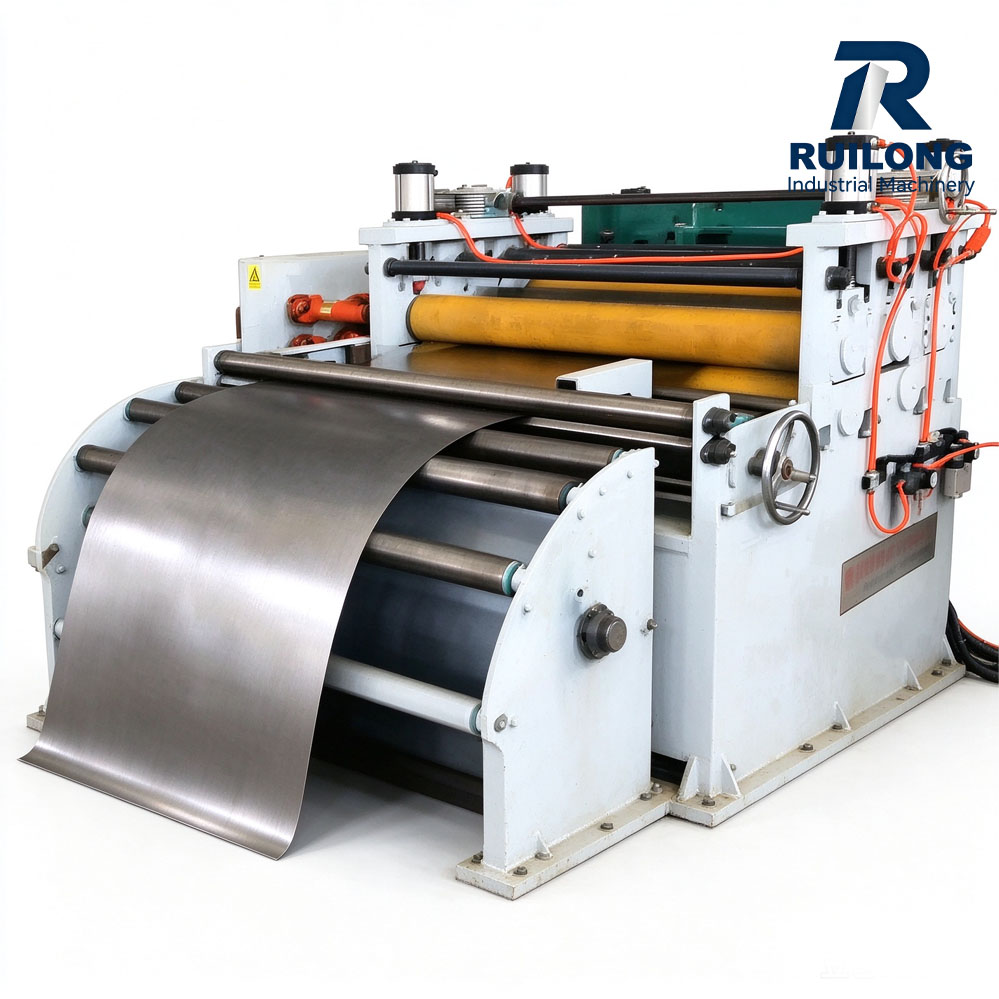
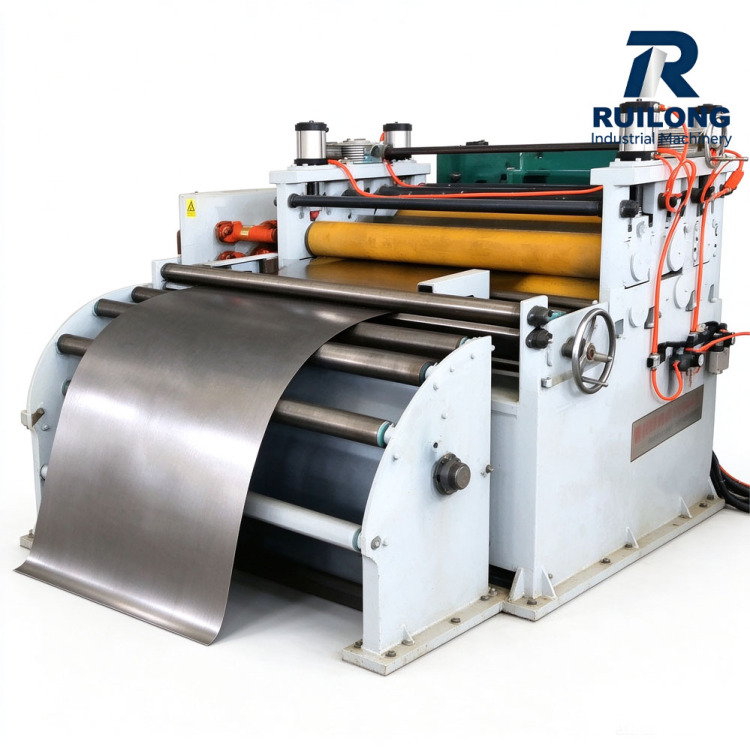
A paint film is a thin, hard surface on a soft substrate, and it scratches exactly the way a car does: point pressure plus relative motion. On a CTL the three failure paths are distinct and each has its own fix:
- Point pressure from a damaged roll prints dents or gloss marks at a regular pitch — one nick in a steel roll prints every revolution. Fix: inspect and protect the roll surface; nothing downstream repairs a printed mark.
- Sliding friction scuffs the finish longitudinally wherever the sheet drags on a surface — belt, pit floor, stack top. Fix: felt or PU contact everywhere the sheet slides, and a loop design where the strip never drags.
- Embedded grit is the stealth killer: hard particles that land on a roll get dragged through the film by the next sheet. A hard steel roll holds the particle at one point; a soft PU roll lets the particle embed into the roll surface, spreading the load over a contact patch and cutting the pressure on the film to below damage levels. That embed-and-release behavior is the mechanical reason PU wins on prepainted duty, not just a hardness preference.
|
Roll surface |
Contact pressure on film |
Grit behavior |
Verdict on prepainted coil |
|
Hard chrome / bare steel |
High — point contact |
Holds particles, drags them |
Feed sections only with guards |
|
PU Shore A 70 |
Low, wide patch |
Embeds and releases |
Leveler and transport duty |
|
PU Shore A 90 |
Moderate |
Embeds, firmer support |
Gauge-heavy prepainted runs |
|
Felt / fabric belts |
Very low, conformal |
Absorbs grit but wears |
Slide-prone surfaces, stack tops |
The leveler on prepainted duty needs one more discipline: the coil arrives essentially flat from the paint line — what it needs is coil-set removal, not a full-flattening pass. Excess penetration bends the panel past what the film tolerates and shows up later as micro-cracking along the bends the customer forms. Ruilong specifies prepainted-leveler regimes as "coil set only, penetration capped, PU contact" and puts the cap in the settings table, because "gentle" is not a setting a crew can verify — the cap is what keeps a cut to length line for prepainted roofing coil from trading flatness for film cracking.
✅ Bottom line: Coating dies from pressure, sliding and grit — PU contact everywhere, felt on slide paths, and penetration capped at coil-set removal.
2. Two Applications, Two Specifications: Roofing Sheets and Sandwich Face Sheets
The same protected line serves two different acceptance regimes, and the spec to enforce depends on where the sheet goes next. Roofing sheet feeds a roll-forming or folding line for trapezoidal or standing-seam profiles — the profile process hides small surface marks inside the ribs, but flatness still matters for profile geometry. Sandwich panel face sheets get bonded to insulation: the glue line is unforgiving of both waviness and contamination, and the visible face of a panel is unforgiving of everything.
|
Parameter |
Prepainted roofing sheet |
Sandwich panel face sheet |
|
Gauge range |
0.4–0.8 mm |
0.4–0.6 mm |
|
Substrate / coating |
Galvalume AZ150 / Z275 + PVDF or SMP 20–35 µm |
Same family; cleanroom handling |
|
Flatness at delivery |
≤2 mm/m |
≤1.5 mm/m, glue-line driven |
|
Surface requirement |
No marks visible after forming |
No marks, no residue — film on |
|
Film laminating |
Optional, transport protection |
Standard, applied at the CTL |
|
Stacker |
Scissor or vacuum |
Vacuum, film intact |
The face-sheet column explains why laminating moves from optional to standard: between your stack and the panel press, every contact lands on a face that will be bonded and displayed, and an inline film — applied after the shear, before the stacker, per the laminating discipline in our elevator-panel article — is cheaper than the rejected panel it prevents. The flatness figure, ≤1.5 mm/m, is driven by the glue line: waves leave voids where the adhesive bridges instead of wetting, and those voids become delamination sites and warranty claims — a cost Ruilong prices into the line rather than into the customer's scrap bin.
For buyers quoting both duties on one line, the honest answer is that the machine is the same and the acceptance sheets are not. Ruilong supplies both acceptance formats with the line — roofing flatness without film if the customer opts out, face-sheet flatness with film adhesion checks on the first piece of every coil — so the two product families are documented as they are judged.
✅ Bottom line: One machine, two acceptance regimes — roofing tolerates ≤2 mm/m and optional film, face sheets demand ≤1.5 mm/m, film and clean contact, because the glue line is unforgiving.
FAQ
Q: Can you level prepainted coil without damaging the finish? A: Yes, within limits — coil-set removal on smooth PU rolls with penetration capped; a full-flattening pass is where micro-cracking starts, especially in cold conditions, so the settings table should state the cap rather than trusting the crew's judgment of "gentle".
Q: Why polyurethane rolls instead of hard chrome on prepainted duty? A: Embed-and-release: hard chrome holds a grit particle at one point and drags it through the film, while polyurethane coated rollers to avoid coating damage let the particle embed into a soft, wide contact patch — the pressure on the film drops below damage level, which is physics working for you rather than inspection working harder.
Q: Should face sheet film go on at the CTL or at the panel press? A: At the CTL — applying it inline protects the sheet through stacking, strapping and transport, exactly the window where marks are born; at the press it is too late, and on a cut to length line for sandwich panel face sheet scope the film unit and its adhesion checks belong in the line's first-piece sheet.
Get the Coating-Protection Spec for Your Two Duties
Send Ruilong your coating classes, gauges and end products, and the engineering team will return the roll surface plan, penetration caps and a custom line quote from our China factory: as the manufacturer behind Tai'an Ruilong Machinery Co., Ltd., we quote supplier/OEM-direct with the scope itemized, free of charge and without obligation.