
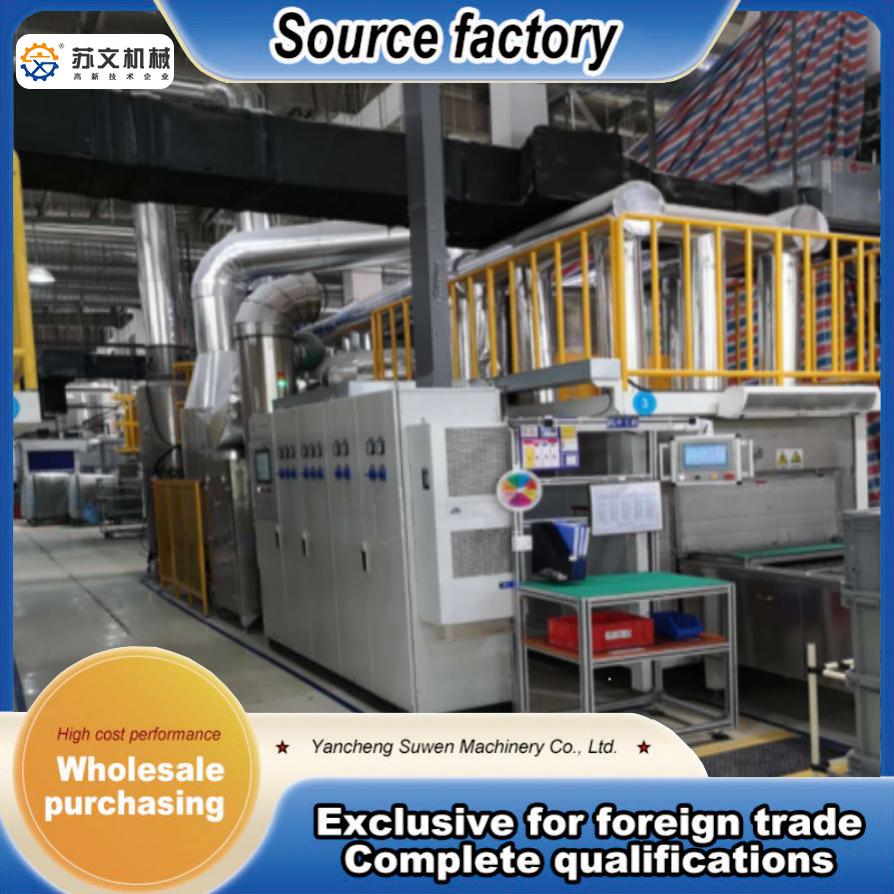
Yancheng Suwen Machinery Co., Ltd. supplies both configurations — mesh-belt continuous lines and batch brazing furnaces — to radiator and cold plate plants. After 300+ line deliveries since 2006, the pattern is consistent: the wrong choice is rarely about brazing quality, and almost always about mismatch between equipment format and product mix. That is why Suwen asks for your core drawings and daily output target before recommending either format.
1. How Do Continuous and Batch Brazing Lines Actually Differ?
A continuous line moves cores on a mesh belt through a fixed 600–650°C temperature profile under nitrogen; a batch furnace processes a loaded tray inside one chamber through a time-based cycle. That structural difference drives every practical decision, summarized below:
|
Dimension |
Continuous (mesh-belt) Line |
Batch Furnace |
|
Throughput |
Hundreds to 1,000+ cores/hour |
Tens to ~200 cores per 3–5 h cycle |
|
Product mix |
Best for 1–3 stable designs |
Best for 5+ designs, small lots |
|
Changeover |
Fixture swap + profile adjustment |
Just reload a different tray |
|
Atmosphere control |
O₂ ≤20–100 ppm, steady state |
O₂ fluctuates during each cycle |
|
Unit energy per part |
Lower at high utilization |
Higher — reheat every cycle |
|
Footprint |
23–65 m straight line |
Compact, one chamber |
|
Labor per shift |
1–2 operators for the whole line |
2–4 for loading/unloading |
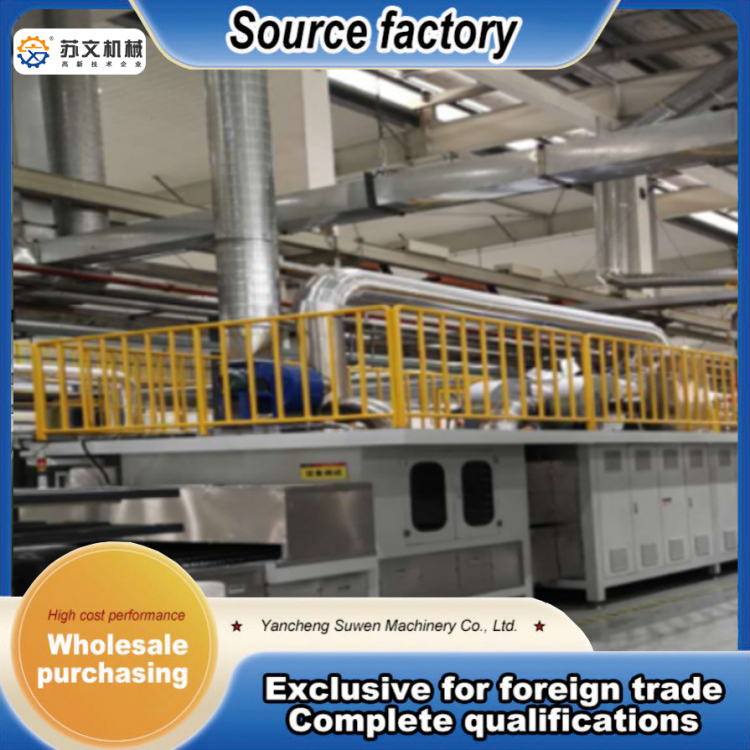
The automation level comparison for heat exchanger production equipment is where the gap widens. A continuous line integrates cleaning, flux spray, dry-off, brazing, and cooling into one fixture flow — one custom OEM/ODM line can run with a single operator monitoring the whole sequence. A batch furnace keeps loading and unloading manual, and every cycle restarts the atmosphere and temperature ramp, which is why batch brazing is common in aerospace, prototype, and repair work but rare in high-volume radiator plants.
One nuance worth flagging: continuous does not mean inflexible. Modern lines with quick-change fixtures and recipe-driven belt speeds (150–1,000 mm/min) handle moderate mix well, and for many factories the honest answer to continuous vs batch aluminum brazing line which is better sits in the middle — a continuous line with fast fixture swaps. A credible China manufacturer will show you the changeover procedure on the layout drawing, not just quote a single throughput number.
✅ Bottom line: Continuous lines suit stable high-volume designs; batch furnaces suit wide mix and small lots.
2. What Does Each Configuration Cost — and When Does the Payback Flip?
A batch brazing furnace enters at roughly $80k–250k, while a full continuous cleaning-brazing line runs $300k–600k+; the higher price is justified only when volume spreads it over enough parts. When buyers compare a batch brazing furnace vs continuous line manufacturer price, the FOB figure is the easy part — labor, atmosphere gas, and floor space decide the real payback.
Cost logic in practice:
- ✅ Batch furnace: lower capital, but each cycle reheats the chamber and consumes nitrogen during stabilization. Labor is the hidden cost — two to four handlers per shift add up fast at high volume.
- ✅ Continuous line: higher capital, but per-part energy and labor fall as utilization rises. A factory running 800+ cores/day typically reaches a lower cost per part within 12–24 months.
- ✅ Breakeven rule of thumb: below roughly 300 cores/day or more than five active core designs, batch usually wins on total cost; above that, continuous wins.
- ✅ Hidden line items: fixtures, flux mixing, nitrogen supply, and commissioning are often excluded from a low ballpark furnace quote — ask each supplier to itemize them.
For factories expecting volume growth, the smarter move is often to specify a continuous line with expansion allowance now: a longer muffle and extra fixture positions cost relatively little upfront compared with replacing a batch furnace in year two. That is the configuration logic Suwen applies when a customer's order book is growing faster than their current output — the OEM line is built around a 3-year volume forecast, not today's orders.
✅ Bottom line: Batch wins below ~300 cores/day or wide mix; continuous wins when volume is stable and rising.
FAQ
Q: Can one continuous line handle both radiators and battery cold plates? A: Yes, if the furnace width and fixture design cover both envelopes — but cold plates need tighter flux control and helium leak testing downstream. When you request a custom configuration, specify dual-product capability up front.
Q: Is a batch furnace ever better for an EV cold plate program? A: For pilot builds and low-volume validation, yes. Once volumes climb past a few hundred plates per day, the answer to continuous vs batch aluminum brazing line which is better shifts decisively to continuous for yield and unit cost. The automation level comparison for heat exchanger production equipment also favors continuous at that scale — fewer handlers, steadier quality.
Q: How do I compare quotes from different brazing equipment suppliers? A: Normalize for what is included — cleaning, flux system, fixtures, installation, training. A wholesale-priced batch furnace without these zones is not equivalent to a turnkey continuous line; price the missing equipment before deciding. That is the practical difference behind any batch brazing furnace vs continuous line manufacturer price comparison.
CTA: Get a Continuous-vs-Batch Recommendation
Send us your core designs and daily output target, and the engineering team at Suwen (Yancheng Suwen Machinery Co., Ltd.) will return a side-by-side configuration with throughput, staffing, and cost-per-part estimates within 5 working days — free. With 300+ brazing lines delivered since 2006, we build both continuous and batch OEM/ODM solutions around your real product mix. Contact Suwen today.
|
|
|
|
Published: November 2026 |
By Suwen Engineering Team |