
1. Why Buying Your Saw and Kiln Separately Costs More Than the Price Gap
The hidden cost of two vendors is not the second invoice — it is the green lumber sitting, moving, and drifting between a saw you do not control and a kiln sized for someone else's output. A mid-size Horizontal woodworking Band Saw Machine typically converts 10–20 m³ of green logs into sawn cants per 8-hour shift, and that wood has to go somewhere fast.
When the kiln is bought separately, three leaks appear immediately. First, green-lumber wait time: stacked cants left more than 48–72 hours in a humid climate start surface mold and stain before they ever reach heat, and a Wood Drying Equipment supplier who never saw your saw line cannot prevent it. Second, handling moves: the separate model adds two or three forklift transfers per batch, roughly $3–6 per m³ in labor and fuel that an in-line layout removes entirely. Third, schedule mismatch: a kiln sized off a generic assumption dries either too slow (capital idle) or too fast (stress checks), because nobody tuned the drying curve to your actual species and thickness mix. In practice a wood drying kiln for sawmill green lumber has to be sized to your real green output, not a catalogue estimate, or the mismatch surfaces as rejects.
Here is the practical comparison mills underweight:
|
Factor |
Separate saw + separate kiln |
Integrated single-supplier line |
|
Green-lumber exposure |
2–5 days of stacking wait, mold risk |
Fed to kiln same shift |
|
Handling moves per batch |
3–4 forklift transfers |
0–1 direct infeed |
|
Throughput match |
Kiln sized from generic estimate |
Kiln sized to your saw's real output |
|
Commissioning |
Two vendors, two site visits |
One commissioning, one training |
|
Accountability |
"blame the other machine" gap |
Single point of responsibility |
The Wood Debarking Machine and resaw steps in between also get overlooked in a piecemeal buy, which is exactly where yield is lost. Xinyang closes that gap by designing the whole flow before a single machine ships.
✅ Bottom line: The separate-buy model bleeds money through wait time, handling, and schedule mismatch — integration removes all three.
2. What a Turnkey Integrated Sawmill + Drying Line Actually Includes
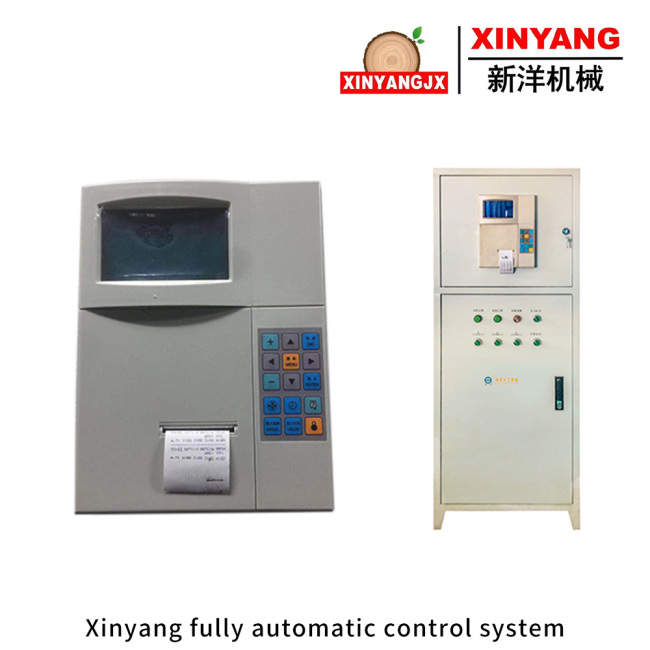
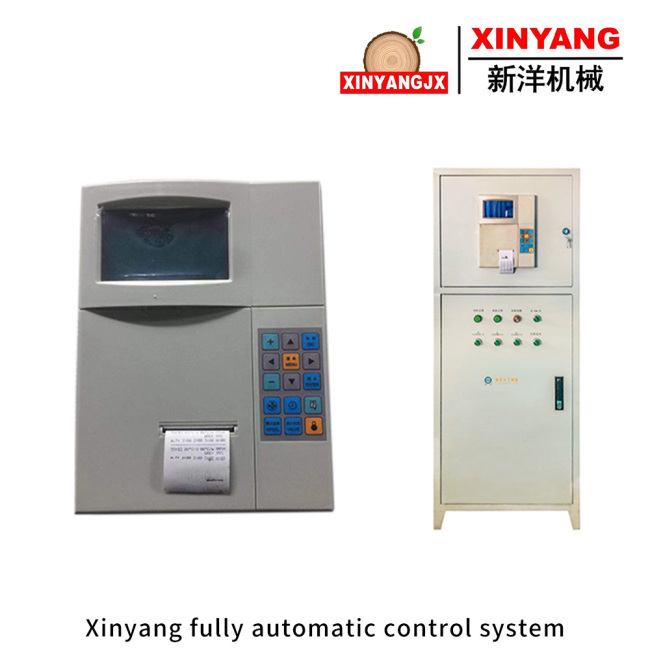
A real integrated line chains every stage from log to kiln-dried board under one control logic, so a wood drying kiln for sawmill green lumber is sized and scheduled to the saw that feeds it, not to a catalogue number. The building blocks are standardized for a complete sawmill and wood drying kiln integrated production line, but the capacities are matched to your daily green output.
The standard chain runs: debarking → primary breakdown on a horizontal band saw → resaw via a Vertical woodworking Band Saw Machine or Multi-blade Wood Saw Machine → Precision Wood Cutting Machine for graded dimensions → drying kiln. Because one engineering team lays it out, the infeed height, conveyor speed, and kiln batch size line up, and a single drying schedule covers the exact cants your saw produces.
Capacity matching is the part most buyers get wrong on their own:
|
Line stage |
Equipment |
Typical role |
Matched to saw output |
|
Pre-processing |
Wood Debarking Machine |
Strip bark, protect blades |
Log diameter |
|
Primary break |
Horizontal Band Saw |
Log → cants |
10–20 m³ / shift |
|
Resaw / grade |
Vertical / Multi-blade Saw |
Cants → boards |
Saw throughput |
|
Drying |
Kiln (30–80 m³ batch) |
Green → 8–12% MC |
One batch per 1–2 shifts |
As a turnkey wood drying kiln plant supplier china and your China manufacturer, Xinyang ships the full line containerized, sends one crew to commission saw and kiln together, and trains your operators on a single control panel — which is why an integrated project reaches first dried batch a week or two faster than two parallel installs. A wood drying kiln for sawmill green lumber inside this line also captures the thin-kerf yield advantage of our band saws, so more of each log reaches the kiln as sellable board rather than sawdust.
✅ Bottom line: Integration means the kiln is engineered to your saw's real output and commissioned as one system, not sized from a guess.
FAQ
Q: Can I add a drying kiln to my existing saw line later instead of buying integrated? A: Yes, and Xinyang can retrofit a kiln to an existing line, but buying integrated lets one team size the kiln to your actual throughput and avoid the handling and MC-drift losses from day one.
Q: How do you size the kiln to the saw's output? A: We measure your green m³ per shift from the band saw, then specify a kiln batch (typically 30–80 m³) that dries in one to two shifts so green wood never queues. Xinyang Machinery validates this against your species and thickness mix.
Q: Why choose a complete sawmill and wood drying kiln integrated production line from one supplier instead of the cheapest saw and kiln separately? A: A turnkey wood drying kiln plant supplier china like Xinyang, your China manufacturer, gives you one drying schedule, one commissioning, unified spare parts, and a single accountable partner — cheaper to run than two vendors even when the upfront quote looks higher.
Get a Single-Supplier Integrated Line Quote
Stop paying the hidden tax between your saw and your kiln. Hangzhou Lin'an Xinyang Machinery Co., Ltd. engineers a complete sawmill and wood drying kiln integrated production line where the saw, resaw, debarking, and drying kiln are sized as one system, commissioned together, and backed by unified training and spare parts. Contact our China factory — your turnkey wood drying kiln plant supplier china — for a free throughput assessment and a custom OEM/ODM quote. Explore the full chain: Horizontal woodworking Band Saw Machine, Vertical woodworking Band Saw Machine, Wood Drying Equipment, Wood Debarking Machine, Multi-blade Wood Saw Machine, and Precision Wood Cutting Machine.
+86 13968020221
Mail:[email protected]