
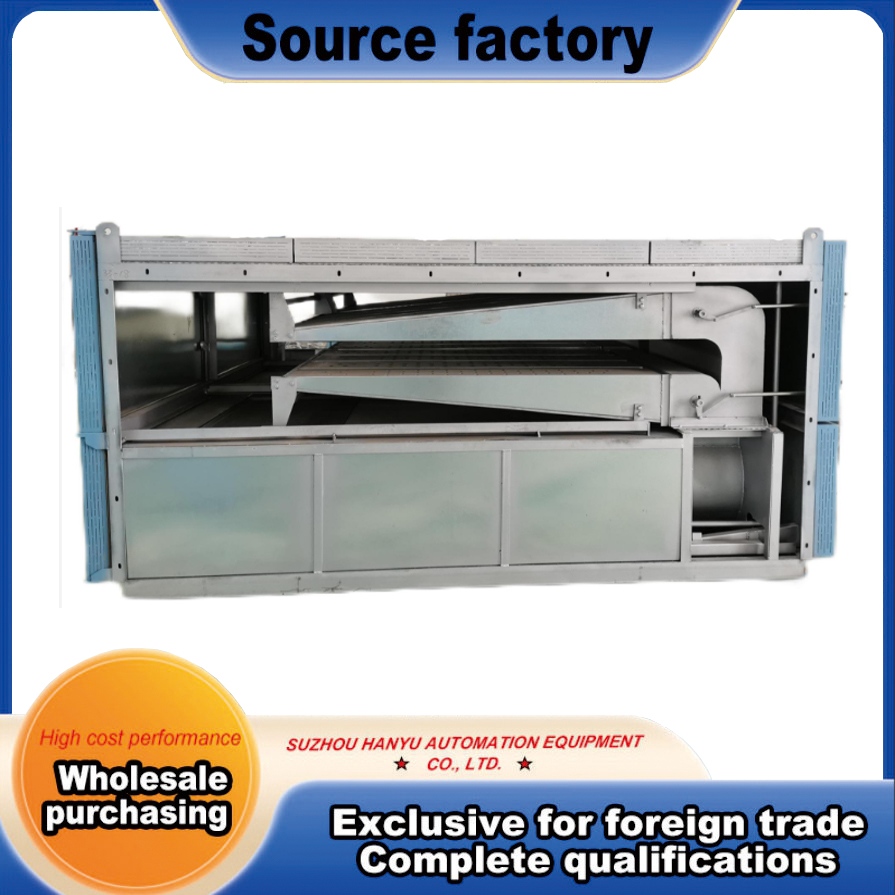
1. Where Does Curing Sit in a CNG Tank Line — and What Is the Furnace Actually Doing?
It sits between winding and testing, and its real job is chemistry, not drying: crosslinking the epoxy so the laminate reaches full degree of cure and a Tg safely above service temperature.
A composite CNG cylinder line runs liner preparation, filament winding, cure, machining and hydrostatic/burst/cycle testing. The winding station deposits fiber and resin; the furnace is where the resin actually becomes a structural material. For epoxy systems that means a ramp to 80-140°C and a 2-8 hour hold, with degree of cure targeted at 95% or higher — anything less leaves uncapped epoxy groups that keep plastifying in service.
The reason the temperature matters so much is the service envelope. ISO 11439 and NGV2 qualify cylinders for roughly -40°C to +82°C, including the roof of a vehicle parked in a hot climate with a full 20-25 MPa charge. The resin system has to hold modulus at that ceiling with margin, which puts the practical Tg target at 100-120°C — and Tg is set by cure degree, which is set by the thermal history the furnace delivers. A tank cured to Tg 95°C passes the burst test in a 22°C test lab and creeps at the valve boss in a Gulf-State summer.
|
Cylinder type |
Construction |
Liner |
Cure's role |
Oven implication |
|
Type 1 |
All-steel |
none |
none |
no composite cure needed |
|
Type 2 |
Steel hoop-wrap |
steel |
resin set on outer wrap |
modest uniformity, larger batch |
|
Type 3 |
Full composite over aluminum |
aluminum |
Tg-driven structure |
zoned oven, rotation recommended |
|
Type 4 |
Full composite over polymer |
HDPE |
Tg + liner protection |
tightest band, ±1.5-2°C, vacuum ports |
The natural gas cylinder filament winding curing process differs from hydrogen vessel production mainly in volume and fiber, not chemistry: CNG plants run far higher unit volumes — often hundreds of tanks per day — usually on E-glass fiber for cost, which means the furnace is a production machine with throughput targets, not a qualification lab instrument. Undercure is also not only a burst problem: NGV2 qualification includes 15,000 pressure cycles, bonfire and valve-torque retention, and an under-cured laminate loses torque at the boss and softens in the fire test before it ever misses burst.
✅ Bottom line: The furnace sets resin Tg 20-30°C above the hottest surface a CNG tank will ever see; undercure surfaces as valve-torque and fire-test failures, not just burst scatter.
2. What Specifications Separate a CNG-Capable Furnace from a Generic Oven?
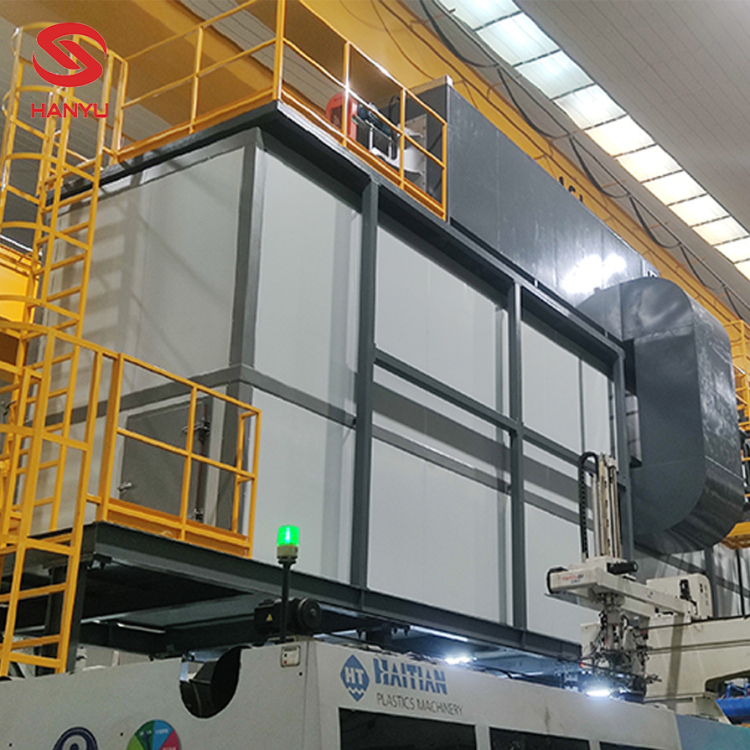
Throughput math and thermal discipline. Size the chamber from tanks per shift times cure hours, then hold the band with independent zones and rotation — the two features a generic industrial box never has.
The sizing calculation comes first. A plant winding 200 tanks a day on a 4-hour cure cycle needs the chamber to hold about 34 tanks at any moment (200 ÷ 24 × 4), plus fixture allowance — so chamber volume, rack layout and door cycle time are production decisions, not catalog sizes. Once the box is big enough, the composite CNG vessel production oven specifications that actually separate suppliers are:
|
Specification |
Typical requirement for CNG lines |
Why it matters |
|
Loaded uniformity |
±2°C (±1.5°C for Type 4) |
Tg consistency across a batch of 30+ tanks |
|
Control accuracy |
±1°C, PID with fuzzy-logic trim |
the uniformity budget must absorb drift and door openings |
|
Independent zones |
1 per ~2 m of chamber |
compensates door-end and discharge-end losses |
|
Mandrel rotation |
2-10 rpm, profile in PLC recipe |
prevents resin-rich bottom arcs on long cylinders |
|
Data logging |
per-tank thermal record, exportable |
ISO 11439 / NGV2 qualification traceability |
|
Vacuum provision |
2 cfm per line for Type 4 |
liner support and void control during gel |
Two of those deserve emphasis. Rotation matters more on CNG tanks than on short hydrogen cylinders because many CNG vessels are long — 1.5 to 3 meters of hoop-wound barrel — and a static cure pools resin along the bottom arc, exactly the defect that becomes a soft band at 82°C. And the data-logging line is not bureaucracy: when your customer's auditor asks for the thermal history behind a failed cycle test, the oven's per-tank record is the only answer that holds up. Both belong in the CNG tank manufacturing curing furnace equipment requirements you write into the RFQ.
Qualification testing then closes the loop. A China manufacturer supplying this market should quote composite CNG vessel production oven specifications against ISO 11439 or NGV2 duty, not generic industrial-oven duty, and should offer the loaded uniformity survey as an acceptance document. HanYu builds zoned, rotating curing furnaces for wound-cylinder lines in Suzhou — chamber dimensions, zone count, rotation profiles and data-logging depth set per project, with ±1.5-2°C loaded uniformity and ±1°C control accuracy as standard commitments, and 1-3 month lead times on FOB terms.
✅ Bottom line: Size the oven from tanks per shift times cure hours, not chamber volume — throughput math and a loaded uniformity survey are what separate a CNG plant oven from a generic box.
FAQ
Q: What temperature and cycle do CNG composite tanks cure at? A: In the natural gas cylinder filament winding curing process, most epoxy systems ramp to 80-140°C and hold 2-8 hours, with fast resin systems shorter. The target is not the temperature itself but the resulting Tg of 100-120°C against an 82°C service ceiling — so the cycle must be written around the resin's kinetics, and the furnace held tight enough that the cold end of every tank still reaches full cure.
Q: Do Type 4 CNG tanks need vacuum during cure, like hydrogen vessels? A: If the resin system is qualified for vacuum-bag or vacuum-only cure, yes — one port per line at 2 cfm, dedicated pumps. The mechanics mirror Type IV hydrogen practice; the differences between the two markets are volume, fiber and duty cycle, and our Type IV hydrogen vessel guide covers the liner-side reasoning in depth. HanYu sizes vacuum manifolds at 2 cfm per line as standard.
Q: Can the furnace be customized for our tank lengths and daily volume? A: HanYu builds to drawing: send tanks per day, tank length and diameter, resin system and cure schedule, and the engineering team returns chamber sizing, zone layout, rotation profile and a loaded-uniformity commitment — the full CNG tank manufacturing curing furnace equipment requirements package. Suzhou Hanyu Automation Equipment Co., Ltd. quotes chamber, controls, installation supervision and spares as one package from the factory, with OEM or ODM branding available for line integrators buying from a China factory.
CTA: Send Your Daily Volume and Cure Schedule
Email tanks per day, tank dimensions, resin system and cure cycle, and the HanYu engineering team will return chamber sizing, a zone layout and an indicative factory price within two working days. Enquiries answered in 2 hours, 48-hour on-site attendance domestically, spares for life.
|
|
|
|
Published: November 2026 |
By HanYu Engineering Team |