
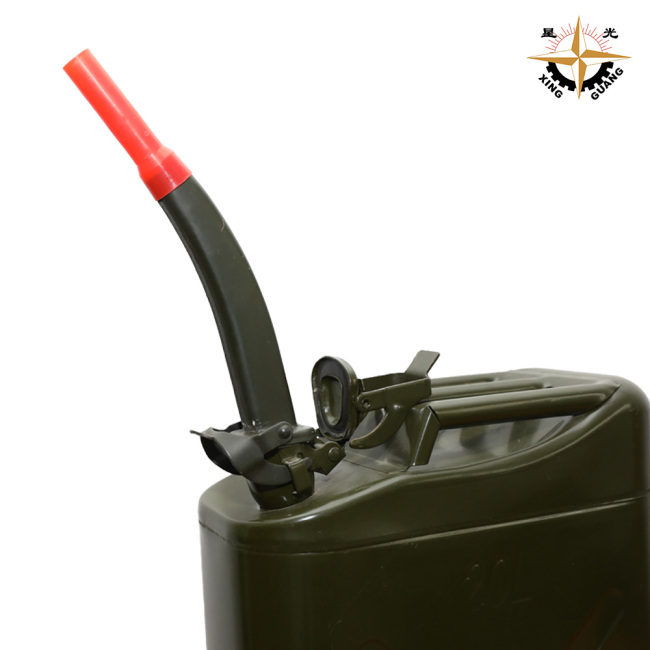

1. Which Material Resists Corrosion Better, Carbon Steel or 304 Stainless?
304 stainless resists corrosion dramatically better because its ~18% chromium content forms a self-healing passive oxide layer that carbon steel simply does not have. A carbon steel can depends entirely on its outer coating—galvanizing or powder paint—and the moment that layer is scratched, chipped, or worn at a weld, rust starts. In a coastal, marine, or chemical-handling setting, an uncoated scratch on carbon steel can bloom into a leak within a few months, while a stainless steel petrol can 304 grade corrosion resistance rating stays intact because the protection is built into the metal itself, not painted on.
The practical difference shows up most in what you put inside. Carbon steel is fine for dry, indoor diesel reserves and short-cycle use, but it struggles with salt spray, acidic contents, and edible oils that accelerate rancidity on bare steel. 304 stainless shrugs off all three. That is why buyers spec 304 for shipboard fuel, food-grade oil drums, and chemical packaging drums where a single rust failure means a contaminated batch.
Here is the head-to-head that matters for specification:
|
Property |
Carbon Steel (coated) |
304 Stainless Steel |
|
Chromium / passive layer |
None (coating only) |
~18% Cr, self-healing |
|
Corrosion in salt spray |
Rusts in months if scratched |
Resists for years |
|
Relative unit cost |
1× (baseline) |
~2–3× |
|
Empty weight (20 L) |
~3.8–4.2 kg |
~4.5–5.0 kg |
|
Typical lifespan |
3–5 years (indoor dry) |
10–15 years |
|
Best use |
Dry diesel reserve, short cycle |
Marine, food, chemical, outdoor |
The numbers above are field-typical, not lab extremes. A stainless steel petrol can 304 grade corrosion resistance rating outperforms coated carbon steel on every corrosive axis, and the gap widens the harsher the environment becomes.
✅ Bottom line: Choose 304 stainless whenever the can meets salt, acid, food, or outdoor exposure; carbon steel only holds up in dry, indoor, short-cycle duty.
2. When Does the Higher Cost of 304 Stainless Actually Pay Off?
304 stainless pays for itself the moment a container faces long-term outdoor storage, saltwater, or contents where contamination is unacceptable—in those cases the 2–3× upfront premium is cheaper than replacing rusted carbon steel every few years. The calculation flips for buyers running dry, climate-controlled diesel tanks on a fast turnover, where cheap carbon steel wins on pure unit economics. So the real question of 304 stainless steel vs carbon steel jerry can which is better is a question of duty cycle, not sticker price.
Run the five-year total cost instead of the upfront number. A carbon steel can at 1× might need two replacements over a decade indoors, while a 304 unit at 2–3× lasts the whole period without re-coating. For marine, food-grade edible oil, or chemical duty the math is even clearer: one contamination or leak event destroys far more value than the material upgrade ever cost. As a stainless steel petrol can manufacturer China factory price comparison shows, sourcing both grades from one direct factory also removes the middleman markup that usually widens the gap.
XINGGUANG produces both materials across the full range—steel handheld cans, metal packaging drums, diesel containers, oil drums, oil barrels, and the grease pumps that pair with them—so you can mix grades by application without juggling multiple suppliers. We quote factory-direct on both, and our engineers will tell you plainly when carbon steel is the smarter buy.
Use this decision rule:
|
Choose 304 stainless if… |
Choose carbon steel if… |
|
Marine, coastal, or salt-spray exposure |
Dry, indoor, temperature-stable storage |
|
Food-grade or pharmaceutical contents |
Short-cycle, high-turnover diesel use |
|
Acidic or corrosive chemicals |
Tightest possible unit-cost budget |
|
Expected life > 8 years outdoors |
Single-trip or disposable duty |
✅ Bottom line: Pay the 304 premium only for corrosive, food, or long-life outdoor duty; for dry indoor short-cycle storage, carbon steel wins on total cost.
FAQ
Q: Is 304 stainless worth the upgrade for plain diesel storage? A: Only if the diesel sits outdoors or in humid, coastal conditions for years. For a climate-controlled indoor tank on fast turnover, coated carbon steel delivers the same function at a third of the cost. A 304 stainless steel vs carbon steel jerry can which is better call always comes back to environment, not the fuel type.
Q: Do you manufacture 304 stainless jerry cans and quote factory pricing? A: Yes. XINGGUANG is a direct China manufacturer offering both carbon steel and 304 stainless steel handheld cans, metal packaging drums, diesel containers, oil drums, oil barrels, and grease pumps, with transparent factory pricing and OEM/ODM customization. Request our stainless steel petrol can manufacturer China factory price sheet and we will benchmark it against your current western distributor. Every stainless order ships with the mill certificate confirming the stainless steel petrol can 304 grade corrosion resistance rating and a material test report.
Q: Can I mix materials and get custom sizes or colors across the range? A: Absolutely. XINGGUANG supports custom capacities, colors, and private-label branding on both grades, and you can combine 304 stainless drums for food or chemical lines with carbon steel cans for bulk diesel—all from one OEM supplier to simplify your supply chain.
Get a Material-Spec Quote
Stop guessing between carbon steel and 304 stainless. XINGGUANG is a direct China manufacturer and OEM/ODM supplier of steel handheld cans, metal packaging drums, diesel containers, oil drums, oil barrels, and grease pumps in both materials, with in-house pressure testing and a transparent factory price breakdown. Contact our factory today for a free material-selection guide and a customized wholesale quote—we will help you spec the right grade for every application.
Tel:+86 13819536668
Email:[email protected]
Website:www.xgpail.com