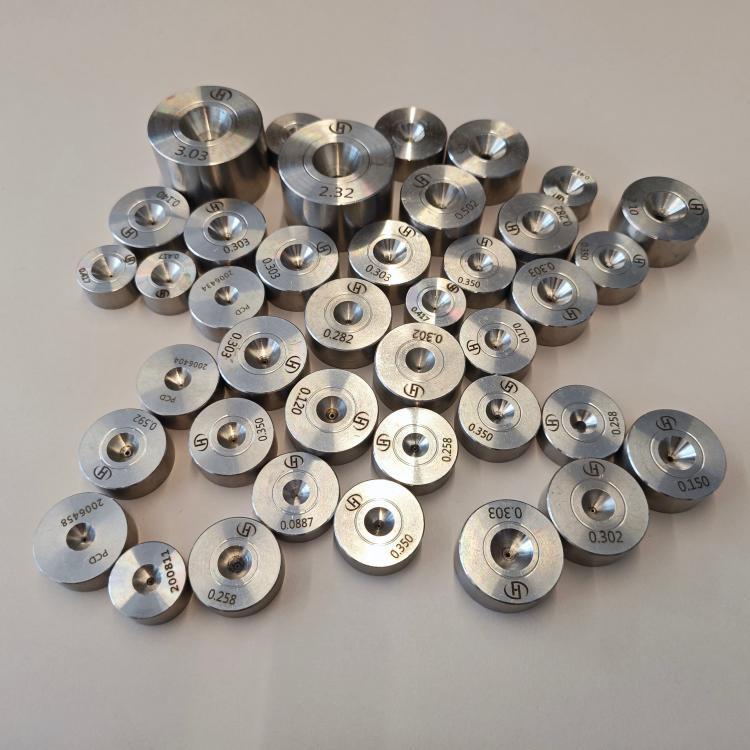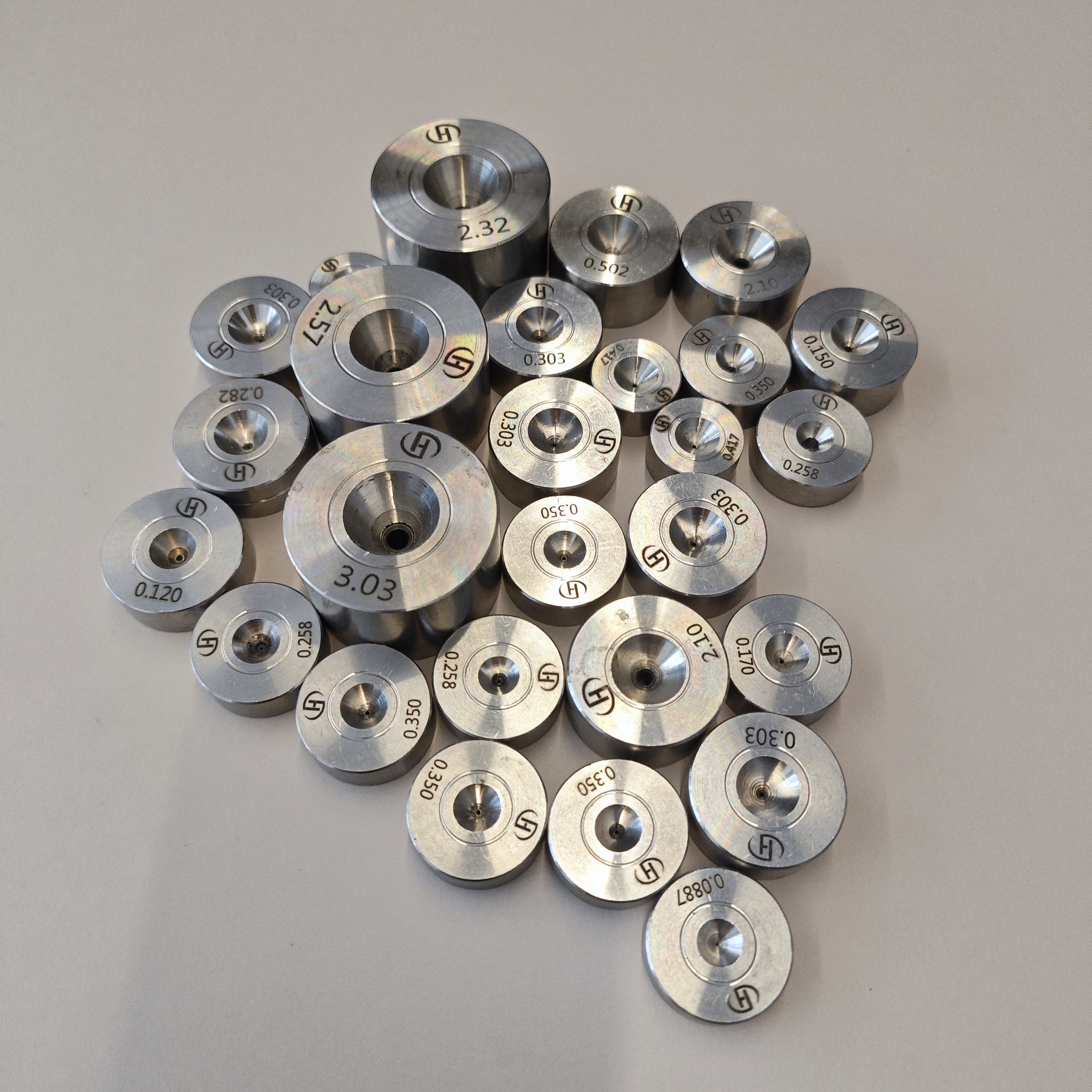
The issue lies with the zinc coating. Galvanized wire has a soft, low-melting-point outer layer. Standard carbide dies are designed for bare steel or copper, prioritizing extreme hardness. If the die's entry angle or bearing length isn't perfectly optimized, the friction will literally scrape the zinc off. Even worse, the heat generated at high drawing speeds can quickly melt the zinc (which melts at just 419°C), causing it to stick to the die bore. This "zinc build-up" leads to severe longitudinal scratches and diameter drift, turning your expensive wire into scrap.
This is why dedicated Galvanized Wire Drawing Dies exist. These dies feature specialized mirror polishing and optimized geometry to glide over the zinc layer rather than cutting into it.
You see this same obsession with extreme surface quality in the micro-wire industry. Manufacturers using Nano Wire Drawing Dies for medical or electronic wire demand perfectly smooth bores to prevent micro-scratches. Drawing galvanized wire requires a similar level of surface refinement.
If you must use carbide, you need a supplier who offers specialized polishing—specifically demanding a surface roughness (Ra) below 0.1μm. But don't just buy an off-the-shelf die and hope for the best. Upgrade to a die designed for soft coatings, or you will spend your initial savings on replacement wire and machine downtime.