
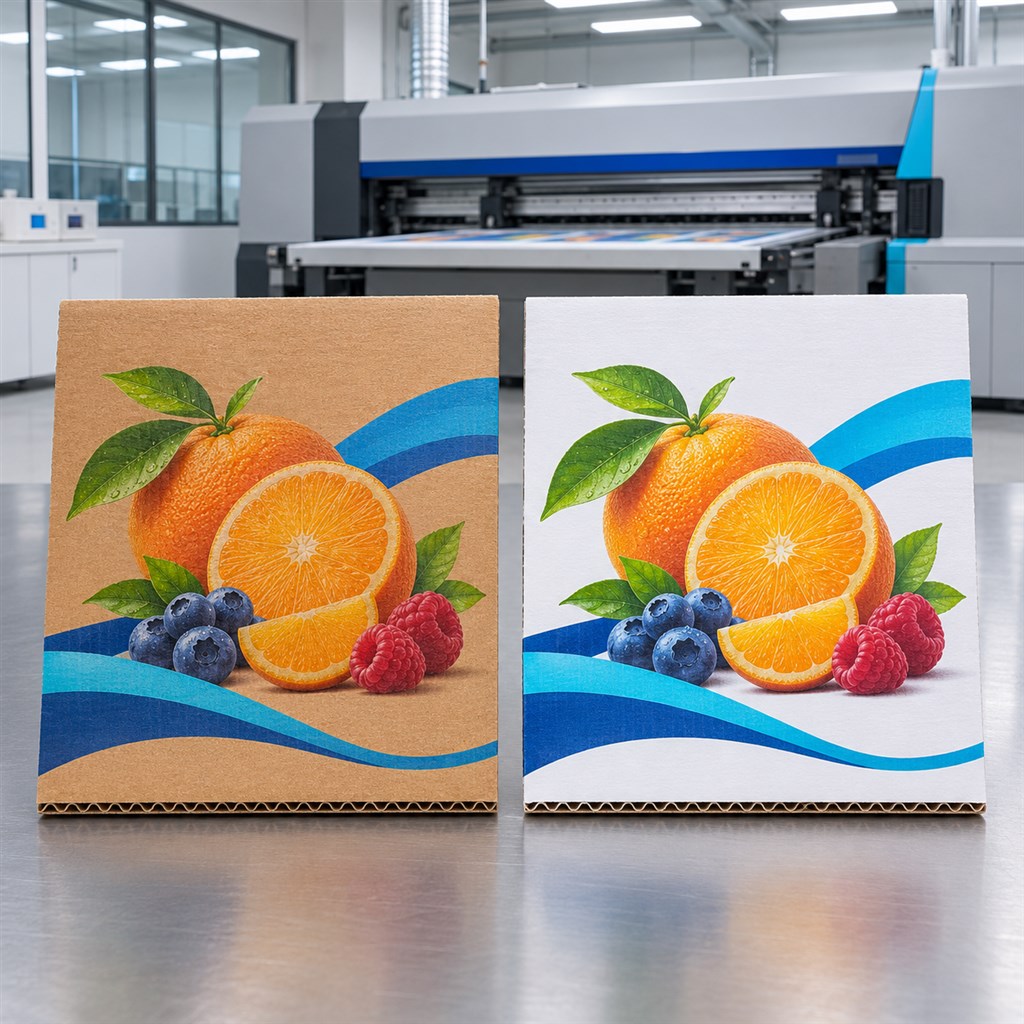
A digital file may be identical, yet the approved result can look different on brown kraft and white-top corrugated board. For converters planning short runs, regional versions or display packaging, substrate choice belongs in the print trial—not in an assumption made after the machine is specified. This guide sets out a practical way to compare the two surfaces with the same artwork and measurable acceptance criteria.
Quick answer: Print representative artwork on the actual board grades, at the intended production settings. Approve color appearance, fine detail, drying, rub resistance and downstream converting on physical samples. A screen preview or a sample on a different liner is not enough.
The recent interest in digital packaging print makes this a timely production question. The decision is still job-specific: a white surface can support a different color target from a natural brown one, while the final choice also depends on packaging design, board supply and total workflow.
Start with the intended box
Record the finished box design, board construction, liner, print side, artwork revision, target quantity and expected repeat orders. Separate mandatory elements—such as readable product information or a customer-approved brand mark—from visual preferences. If a barcode or market-specific claim is present, obtain the responsible party's approved content and verification method before trial printing.
Ask whether the printed sheet will be slotted, die cut, folded or glued. A print that looks acceptable flat may be unsuitable when critical text crosses a crease or when the printed surface is rubbed during transfer. Define the trial at the finished-box level wherever possible.
Use paired board samples
Prepare approved brown kraft and white-top board from the grades the plant actually plans to run. Label each sample with its supplier, construction, surface and date. Keep artwork, image size and evaluation conditions consistent so that the board surface is the main variable. If an ink set, primer or coating must change, document that as a separate configuration rather than treating the result as a direct one-variable comparison.
Include solid areas, small text, fine lines, gradients, brand colors and a realistic image. Add the difficult colors that matter to the customer. A test pattern alone may not reveal the problems that appear on the final artwork.
Approve appearance on the real substrate
Natural kraft changes the visual background under transparent inks, while a white-top liner offers a different starting point. Neither surface should be described as universally better. Compare samples in agreed lighting and at the normal viewing distance. If color tolerances matter, agree on the measurement method, reference and pass criteria with the customer and print specialist before production.
Check legibility, coverage, banding, mottling and any visible flute-related variation. Inspect both the first approved sheet and later sheets from the run. Record whether a change in board batch or surface condition changes the appearance.
Test the complete workflow
Evaluate whether the printed surface is dry enough for the next handling step under the proposed production conditions. Use the customer's required rub, scuff or handling test, if one exists; do not substitute an arbitrary pass claim. Then run the sheets through the intended slotting, die-cutting, folding or gluing sequence. Note transfer marks, cracked folds, damaged image areas and any difference between the flat proof and finished box.
For variable artwork, verify that each version uses the approved board and print recipe. A correct file can still produce the wrong finished package if a production team switches substrate without repeating the relevant checks.
Record a decision that can be repeated
A useful decision note explains which liner was accepted for which job, what changes would trigger a new trial, and who approved the result. It should not claim a universal cost or speed advantage without a plant-specific calculation.
FAQ
Can a proof on white board approve a brown kraft job?
It may help review layout, but it does not establish color appearance or readability on the brown surface. Use the intended liner for final approval.
Does digital printing remove the need for production trials?
No. File changes may be faster, but board, ink, drying and converting still need representative checks.
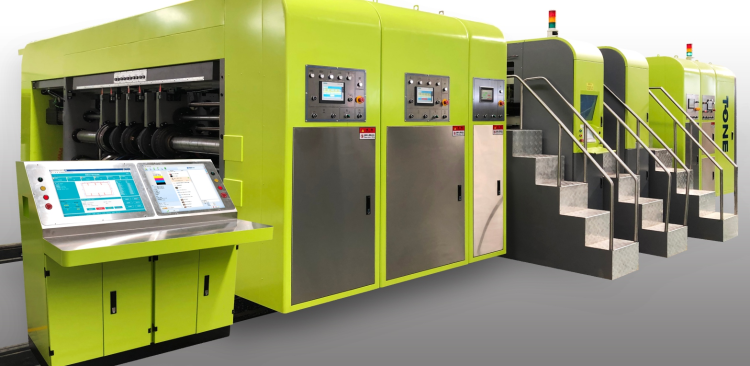
Review T-ONE's corrugated digital printing machinery while defining the print and board samples. To discuss a representative trial, send the approved artwork, board specifications and converting requirements through the contact page.