Abstract
The SP waste heat boiler matched with the new dry-process cement production line serves as the core equipment of the low-temperature waste heat power generation system. It recovers thermal energy from 320~400 ℃ low-temperature flue gas of the preheater to supply steam for the turbine and reduce the comprehensive energy consumption of cement production. The flue gas at the kiln tail carries a dust concentration up to 80~100 g/m³. The dust mainly consists of ultra-fine raw meal powder rich in alkali metal oxides and SO₃, which easily adheres electrostatically and forms hard cakes on the surface of heat exchange tubes. This leads to sharp rise of flue resistance and severe attenuation of heat transfer efficiency. Traditional mechanical rapping soot cleaning suffers from tube abrasion, air leakage and heavy maintenance workload. Aiming at the high negative pressure, high dust load and easy ash deposition conditions of cement SP boilers, the matrix layout scheme of SQ series diaphragm-type Acoustic Soot Blower is adopted. Relying on low-frequency high-energy sound waves, it realizes full-process online preventive soot cleaning, inhibits dust adhesion and caking from the source, stabilizes boiler steam output and extends the service life of tube bundles. It provides a long-acting, low-maintenance standardized soot cleaning solution for waste heat power generation systems in the cement industry.
Keywords: Cement kiln tail; SP waste heat boiler; low-temperature waste heat power generation; diaphragm-type acoustic soot blowing; raw meal dust; tube bundle ash blocking
1. Analysis of Working Conditions and Ash Hazards of SP Waste Heat Boiler
1.1 Basic Working Conditions of the Boiler
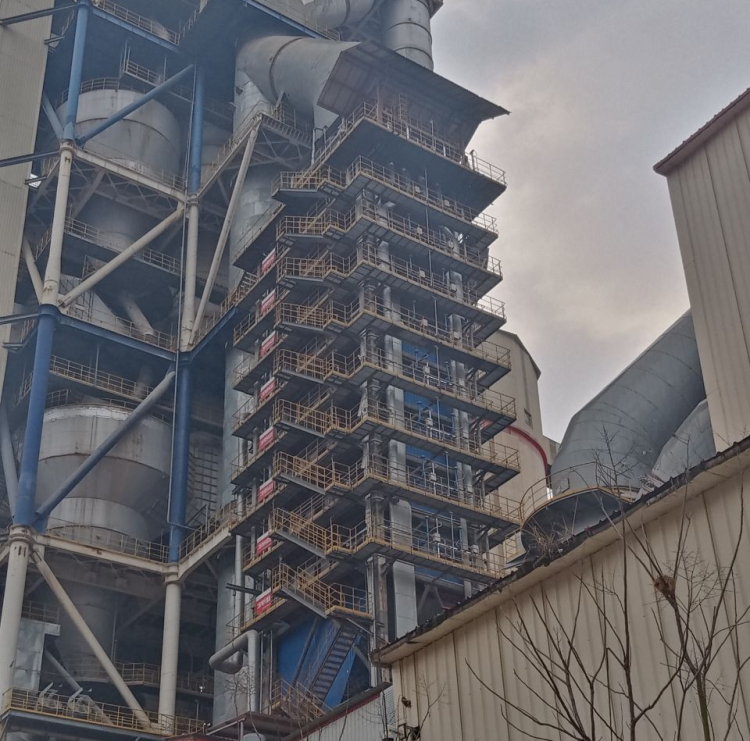
The SP waste heat boiler at cement kiln tail receives flue gas from the outlet of the cement preheater. Its operating negative pressure reaches -5000~-8500 Pa, the flue gas temperature ranges from 320 ℃ to 400 ℃, and the dust content under standard condition is 80~100 g/Nm³. Over 90% of dust particles are smaller than 10 μm, and the ultra-fine powder has extremely strong electrostatic adsorption capacity. The dust is mainly composed of CaO and SiO₂, accompanied by trace potassium and sodium alkali metal salts and SO₃ in flue gas. Sulfate viscous ash layers tend to form under low-temperature conditions. The whole system runs continuously for 24 hours synchronously with the cement rotary kiln. Once ash blockage causes shutdown failure, clinker production and waste heat power generation of the cement line will be interrupted simultaneously, bringing double economic losses.
1.2 Ash Formation Mechanism and Production Hazards
Ultra-fine raw meal dust adheres to the surface of plain tubes and finned tube bundles by electrostatic attraction. Loose floating ash of 20~50 μm forms in the initial stage. After long-term operation, alkali metal sulfate fills the gaps in ash layers, turning loose dust into dense hard ash and bridging along tube bundles to block flue gas channels, which triggers multiple adverse consequences: 1.2.1 Decline of waste heat power generation benefit: The ash layer has an extremely low thermal conductivity, which sharply increases the heat transfer resistance of heating surfaces. The boiler steam output drops by 10%~25%, waste heat power generation decreases accordingly, and the self-power consumption cost of cement plants rises. 1.2.2 Imbalance of kiln system conditions: Ash blockage of tube bundles continuously raises flue resistance. The high-temperature induced draft fan runs at full load with high current and surging power consumption. Furnace negative pressure fluctuates, impairing the stability of preheater heat exchange and clinker calcination. 1.2.3 Equipment corrosion and shortened service life: Sulfate ash layers wrap the tube wall to trigger electrochemical corrosion, thinning the tube wall year by year and bringing risks of tube rupture and shutdown. 1.2.4 Obvious shortcomings of traditional soot cleaning methods a. Mechanical hammer rapping: Soot is removed by impact force. Long-term impact causes metal fatigue and cracking at tube welds and air leakage. A large amount of soot dislodged by rapping rushes into the high-temperature fan instantly and aggravates fan abrasion. Motors and reducers of the equipment are prone to damage, requiring frequent replacement of spare parts every month. Compared with Acoustic Soot Blower, this mechanical solution cannot deliver continuous, non-contact preventive ash removal. b. Manual shutdown soot cleaning: The whole line must shut down and cool down. A single overhaul takes 8~12 hours, causing huge production loss of clinker. In addition, soot cleaning in high-temperature flue ducts involves safety risks such as dust exposure and scalding. Unlike the Boiler Acoustic Soot Blower, this method interrupts normal kiln operation completely. c. Simple compressed air direct blowing: It can only remove surface floating ash and cannot clear caked hard ash in gaps between tube bundles. There are many blind cleaning zones, so it only treats symptoms rather than root causes. It lacks the full-space coverage that Shock Wave Soot Blower and acoustic soot cleaning systems can achieve.
2. Working Principle and Condition Adaptation Advantages of Diaphragm-Type Acoustic Soot Blower
2.1 Core Soot Cleaning Principle
The diaphragm-type Boiler Acoustic Soot Blower takes 0.4–0.5 MPa clean compressed air as power source to drive the internal high-strength titanium alloy diaphragm for high-speed self-excited oscillation. It converts air potential energy into 75–95 Hz low-frequency high-energy sound waves with sound pressure level ≥155 dB. After amplification by a horn, sound waves radiate spherically to the whole boiler space. Sound waves feature diffraction and 绕射 (diffraction) characteristics, penetrating gaps between tube bundles and dead corners of flue ducts. Alternating vibration breaks the electrostatic adhesion force between dust particles and between dust and tube walls, generating fatigue cracks continuously in ash layers. Loose powder is carried by flue gas into the downstream dust removal system or falls into the boiler ash hopper by gravity. No mechanical parts contact the heat exchange tube bundles in the whole process. It is a preventive online soot cleaning method that continuously inhibits ash thickening and caking.
2.2 Unique Advantages for Cement SP Boilers
2.2.1 Non-contact flexible soot cleaning to protect heat exchange tube bundles No mechanical impact or high-pressure air flow scouring, so it will not cause weld fatigue or tube wall abrasion of tube bundles and avoid tube rupture and leakage risks. The sound wave vibration frequency is far away from the inherent resonance interval of the boiler body, so no structural damage occurs after long-term operation. 2.2.2 Full coverage without blind cleaning zones Low-frequency sound waves can penetrate multi-layer tube bundles, flue corners and narrow interlayers, solving the pain points that mechanical rapping and direct air blowing can only clean local areas. It covers all heating surfaces including evaporators, economizers and superheaters. 2.2.3 Reliable sealing under high negative pressure conditions without air leakage loss The wall-penetrating installation structure of the equipment is tightly sealed. Compared with multiple dynamic seals of rapping devices that easily leak air, it will not suck in a large amount of cold air to reduce flue gas temperature and ensures stable waste heat recovery efficiency. 2.2.4 Fully automatic online operation without interrupting cement production It is equipped with an IoT intelligent PLC electric control box with a timed cyclic soot cleaning program. Soot cleaning runs synchronously when the cement kiln operates at full load without shutdown. It can connect to the DCS central control system of cement plants for remote start-stop and fault alarm. 2.2.5 Extremely low operation and maintenance cost suitable for continuous production The whole machine has no rotating motors, reducers or other vulnerable components, and the core titanium alloy diaphragm enjoys a long service life. Daily work only includes inspection of air source pressure and solenoid valve conditions, greatly reducing spare parts procurement and manual maintenance workload.
3. Matrix Layout Configuration Scheme for SP Boilers
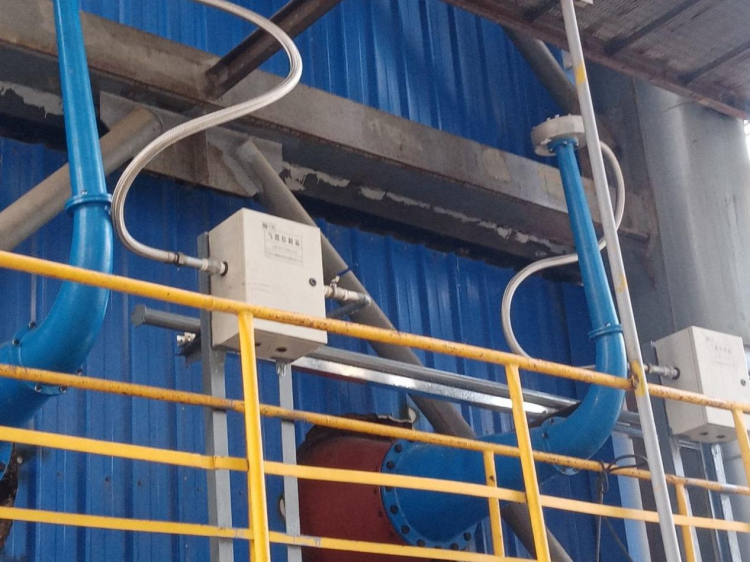
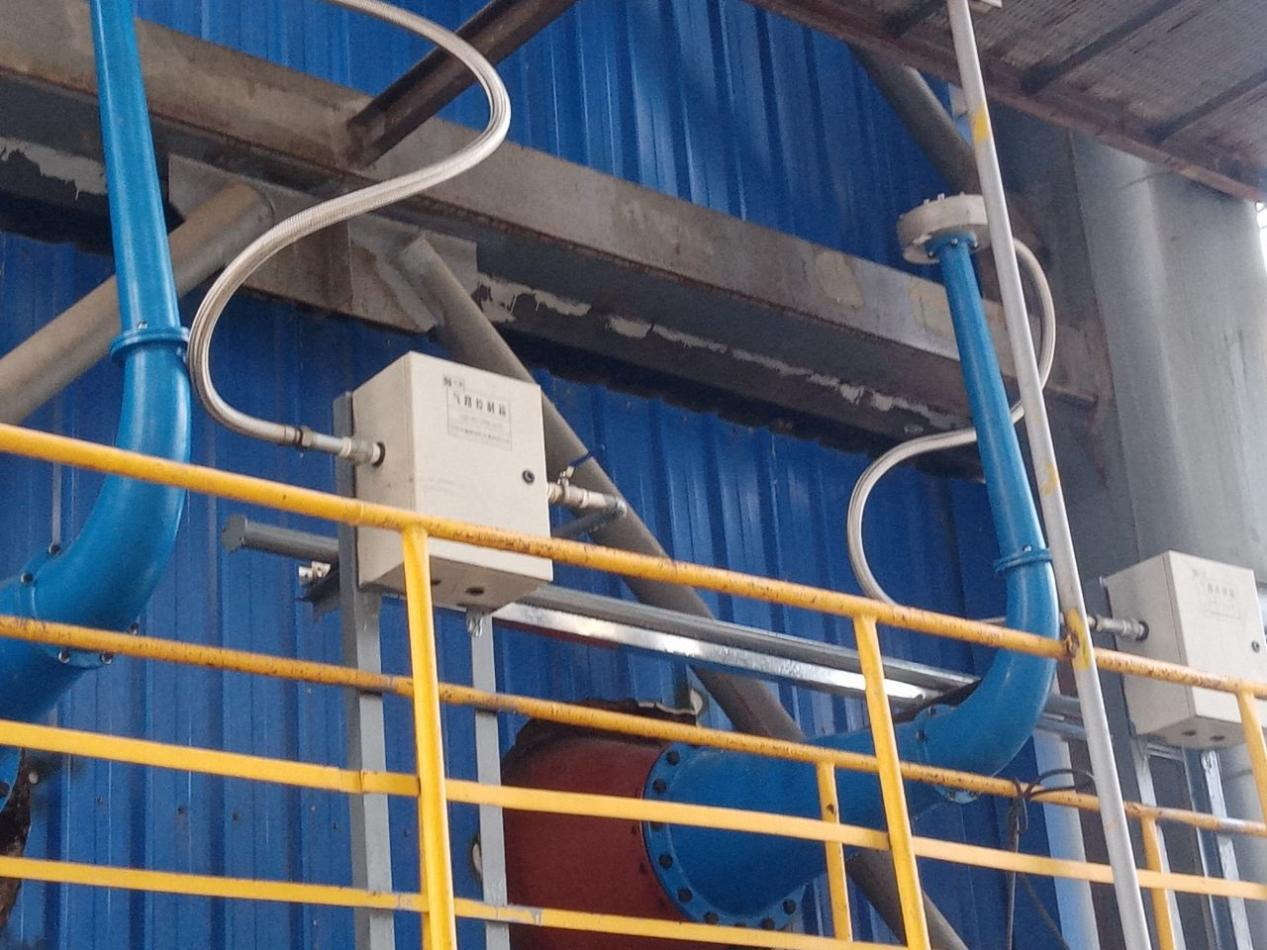
Combined with the vertical flue structure, flue gas flow direction and dust deposition rule of the kiln tail SP boiler, diaphragm-type acoustic soot blowers are arranged in layered matrix: 3.1 High-temperature tube bundle zone of superheater and evaporator: Multiple SQ-75WT acoustic soot blowers are installed in layers along both sides of the boiler wall. Each unit delivers an axial cleaning distance of 6–8 m and radial coverage of 3–4 m, fully covering the upper high-temperature tube bundles to strip loose raw meal floating ash in advance. 3.2 Low-temperature economizer section: Supplemental soot cleaning points are arranged to continuously disturb sulfate viscous ash and prevent ash hardening and caking in the low-temperature section. 3.3 Supporting air supply and control system: Independent DN25 compressed air pipelines are laid, equipped with filter pressure reducing valves and oil-water separators to guarantee clean air sources. A special PLC electric control box is configured to independently set soot cleaning intervals and single sound duration for each zone. The whole system can be installed and renovated during the monthly short maintenance window of cement plants. The manufacturer provides on-site technical guidance, equipment commissioning and special operation training for operators throughout the whole process.
4. Comprehensive Application Effect after On-site Commissioning
4.1 Stabilize waste heat power generation output and reduce production energy consumption The acoustic system runs 24-hour cyclic online soot cleaning. No continuous heat-insulating ash layer forms on tube bundle surfaces, and the boiler heat transfer efficiency returns to the design standard. Steam output rises steadily under the same kiln conditions, and waste heat power generation increases significantly. The flue gas pressure difference stays within the design range for a long time, the operating current of the high-temperature induced draft fan drops, and the comprehensive power consumption cost of the plant is cut. 4.2 Guarantee continuous and stable operation of cement kilns 1~2 times of manual shutdown soot cleaning per month is eliminated, reducing clinker capacity loss caused by production halt. The problem that a large amount of dust from mechanical rapping impacts the high-temperature fan instantly is mitigated, so fan abrasion and overhaul frequency decrease greatly. The negative pressure condition of the preheater remains stable, and the consistency of clinker calcination quality is improved. 4.3 Extend overhaul cycle of boiler tube bundles and save spare parts investment Impact-induced tube bundle fatigue damage from impact soot cleaning is eliminated, sulfate corrosion on tube walls is obviously relieved, and the replacement cycle of heat exchange tube bundles is extended by 2~3 times. The procurement cost of pipe materials, welding materials and other spare parts is greatly reduced. 4.4 Simple operation and maintenance with full-cycle after-sales support The equipment features simple structure and low failure rate. Frontline staff only need short-time daily inspection of air source conditions. The whole machine enjoys a one-year warranty. Vulnerable parts including titanium alloy diaphragms and solenoid valves are replaced free of charge. If faults occur during the peak season of cement production, technical personnel of the manufacturer will arrive at the site within 24 hours to handle the problem and ensure uninterrupted operation of the kiln system.
Mobile: +86 13624991822
Email: [email protected]
Website:www.zxautec.com