
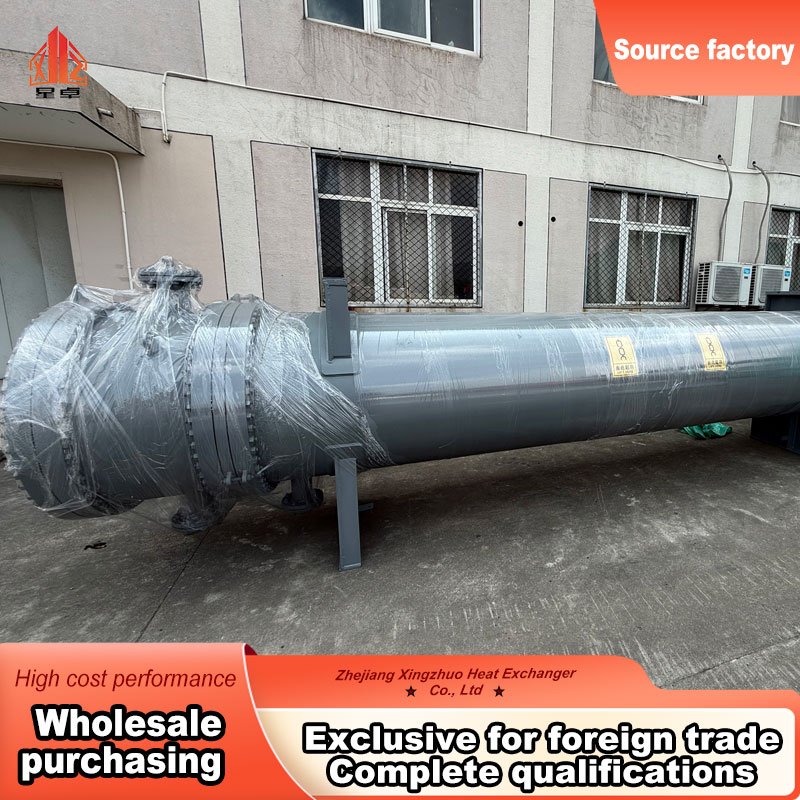
1. What Are the Five Most Common Heat Exchanger Purchasing Mistakes?
They are: buying from a shell-dimension catalog quote, ignoring the supplier's pressure vessel license class, omitting fouling factors, underestimating maintenance access, and accepting incomplete documentation. Each one looks harmless at the quotation stage and expensive at the plant stage:
- Buying on shell dimensions instead of duty data. A catalog unit with the right nozzle sizes and footprint may carry 20% less effective heat transfer area than your duty requires. The unit "fits" and "works" — it just never reaches your outlet temperature, and the shortfall gets blamed on the process. Always buy heat exchanger equipment against a thermal calculation sheet, not against dimensions.
- Ignoring the manufacturer's license class. For designs above roughly 10 MPa or with hazardous media, a Class III pressure vessel qualification is mandatory — not a preference. A supplier without the license either refuses the job or quietly outsources it, and you inherit a supply chain you never vetted. Zhejiang Xingzhuo Heat Exchange Equipment Co., Ltd. holds Class I, II, and III qualifications in-house, so the welders, the NDT, and the liability all stay under one roof.
- Omitting fouling factors from the specification. A quote calculated with clean-surface assumptions looks 10–15% cheaper because it specifies less surface area. Within months, fouling eats the margin and the unit runs under temperature. Specify the fouling tendency of both sides in the RFQ — it is one line that saves one shutdown.
- Underestimating maintenance access. A floating head design needs bundle-pull clearance — real floor space and crane access at your site. Buyers who skip this check end up with a serviceable design that cannot be serviced, or pay for field modifications later.
- Accepting incomplete documentation. No mill certificates, no WPS/PQR welding records, no hydrostatic test report. The paperwork seems optional until your insurance auditor, your client's engineer, or your government inspector asks for it. Request the full document package as a contractual deliverable.
✅ Bottom line: Every one of these five mistakes is avoidable with a specification sheet and two contract clauses — duty-data-based sizing and a full documentation package.
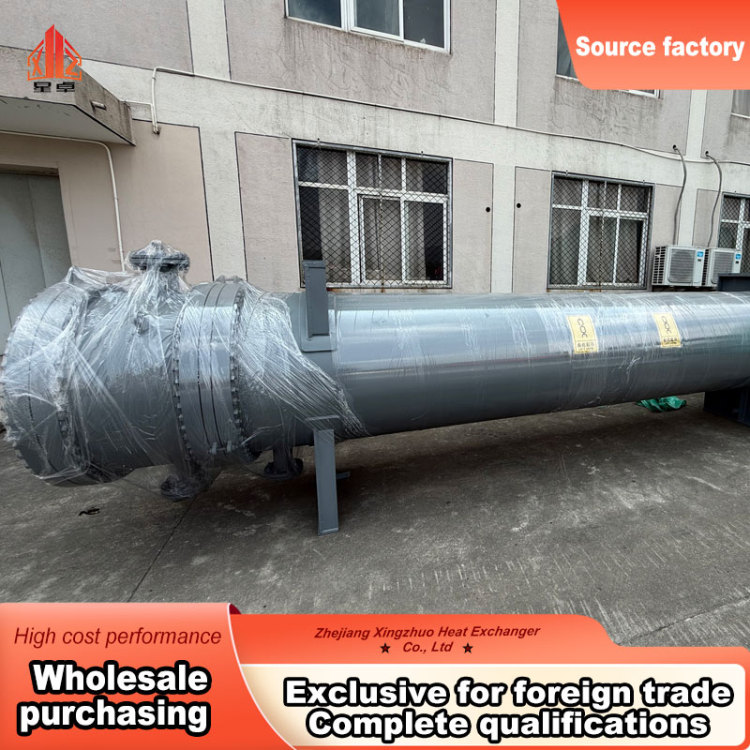
2. Why Is the Most Efficient Heat Exchanger the One With the Lowest Ten-Year Cost?
Because purchase price is typically 15–25% of what a process heat exchanger costs over ten years — cleaning downtime, spare tubes, gaskets, and energy losses from fouled surfaces dominate the rest. The "cheapest" quote usually wins the purchase order and loses the decade.
Run the arithmetic before you buy a heat exchanger for any continuous chemical service:
- ✅ Cleaning downtime. A unit specified with proper fouling margin and a serviceable design (floating head or U-tube where the duty calls for it) cleans on a 12-month cycle. A marginal unit cleans quarterly. At 2–3 days of lost production per cleaning, the difference is measurable in revenue, not in dollars of equipment price.
- ✅ Energy penalty of fouling. A fouled surface drops the overall heat transfer coefficient by 20–40% before anyone notices. The extra steam or cooling water needed to hold outlet temperature is a permanent operating cost — and an "efficient heat exchanger" is precisely the one that resists this degradation through surface design, velocity management, and material choice.
- ✅ Spare parts and serviceability. A design from a factory that supplies tube bundles, gaskets, and tubesheets for years after delivery stays repairable. Trading-company purchases often strand owners when the original catalog disappears.
- ✅ Documentation and re-certification costs. Units with complete traceability files pass re-inspection without re-testing. Units without them sometimes require expensive re-verification — or replacement — at audit time.
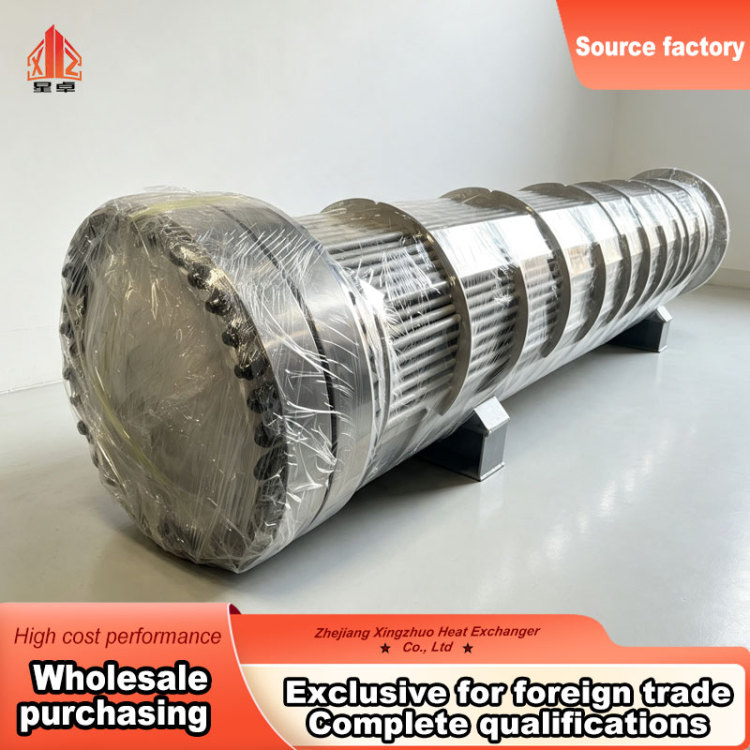
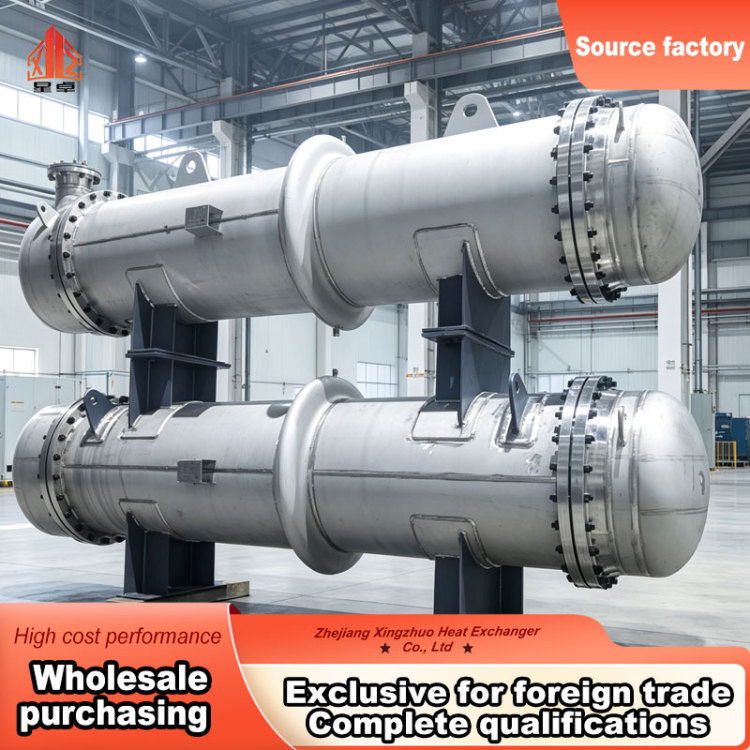
Xingzhuo prices its export units with this lifecycle picture attached: every quotation includes the thermal calculation sheet, material certificates, and the maintenance intervals the design assumes, so buyers can compare ten-year cost instead of invoice cost. The factory builds floating head, U-tube, double tubesheet, and spiral plate configurations in carbon steel through titanium as an OEM/ODM heat exchanger manufacturer, and supports single-unit replacement orders as well as project batches for engineering contractors.
✅ Bottom line: Over ten years, cleaning downtime and fouling energy losses cost 3–5 times the purchase price — specify fouling margins and serviceability now, or pay for them every quarter.
FAQ
Q: How much does a fouling factor really change the quotation? A: It typically adds 10–15% to the required heat transfer area versus a clean-surface calculation — which raises the purchase price slightly and prevents the much larger cost of a chronically underperforming unit. Never accept a quote that ignores fouling on a chemical duty.
Q: Can I buy one replacement unit, or do suppliers only want large orders? A: Single-unit orders are normal for replacement and retrofit projects. Xingzhuo manufactures single replacement bundles and complete units at factory-direct pricing, plus OEM/ODM custom builds when the original equi
pment is obsolete.
Q: What documents should I require before accepting delivery? A: At minimum: material mill test certificates, WPS/PQR welding records, NDT reports, the hydrostatic test report, and the thermal calculation sheet. Xingzhuo ships this package as standard with every industrial heat exchanger order — request it in the purchase contract from any supplier you buy a heat exchanger from.
CTA: Get a Lifecycle-Cost Quote for Your Duty
Send your process data to Xingzhuo and receive a quotation built on real duty data — thermal calculation sheet, material recommendation, fouling margins, and ten-year maintenance intervals included, direct from a Class I/II/III certified China manufacturer. Know the real cost before you buy.